
Last updated November 23, 2026
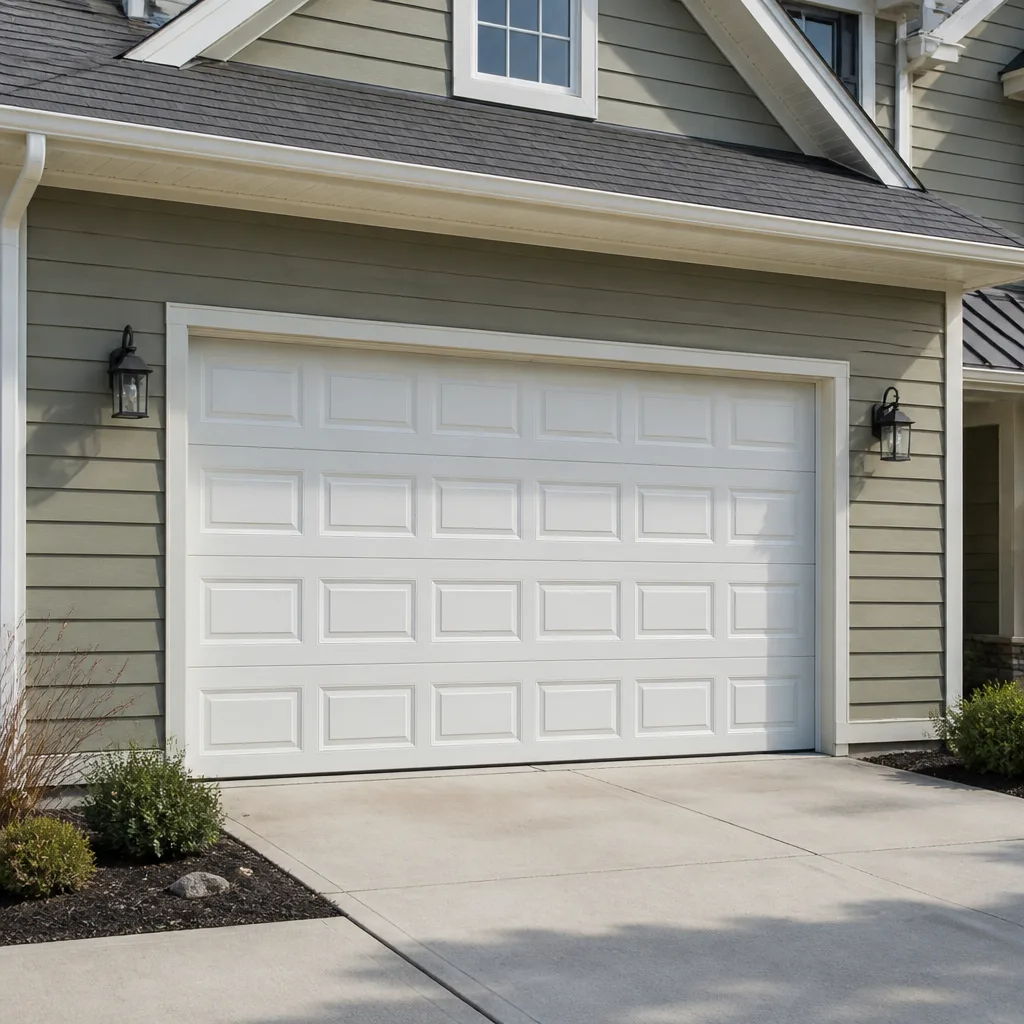 Raised-panel steel
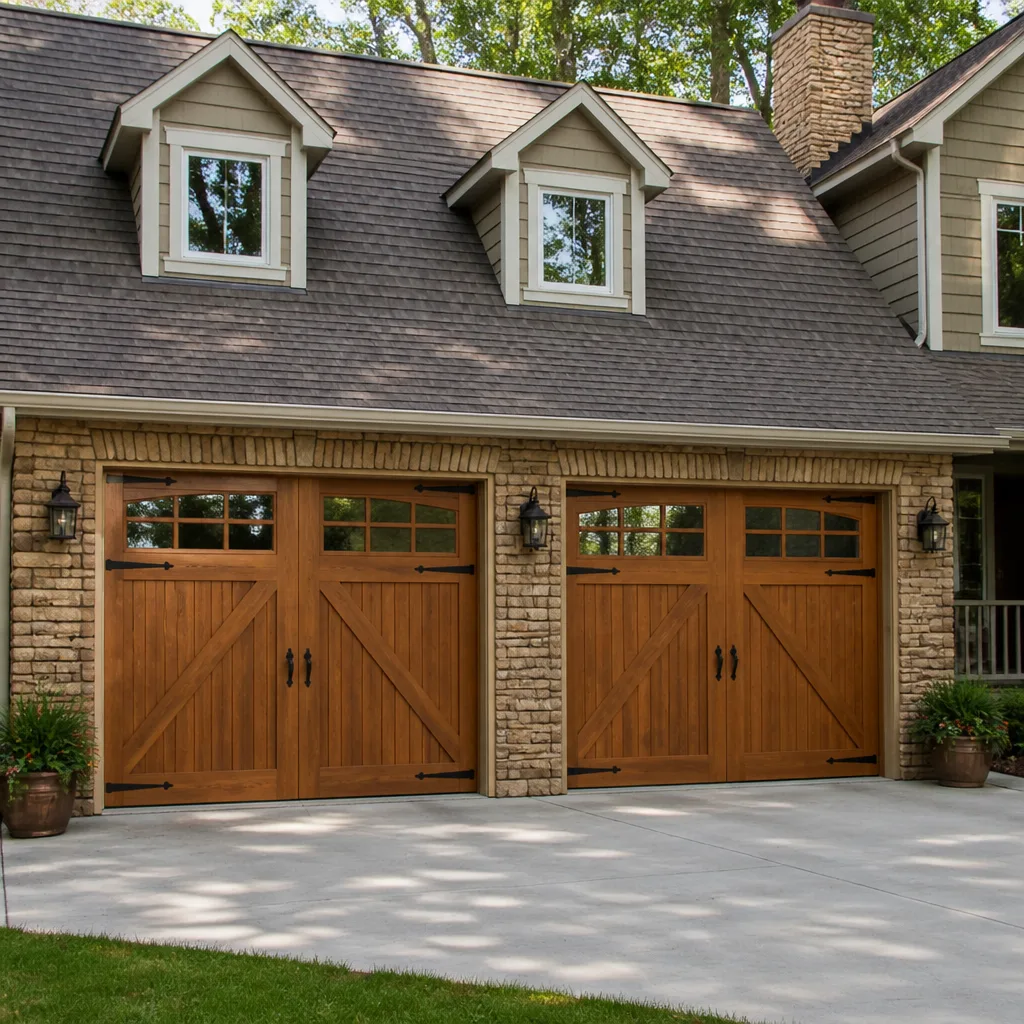 Carriage house
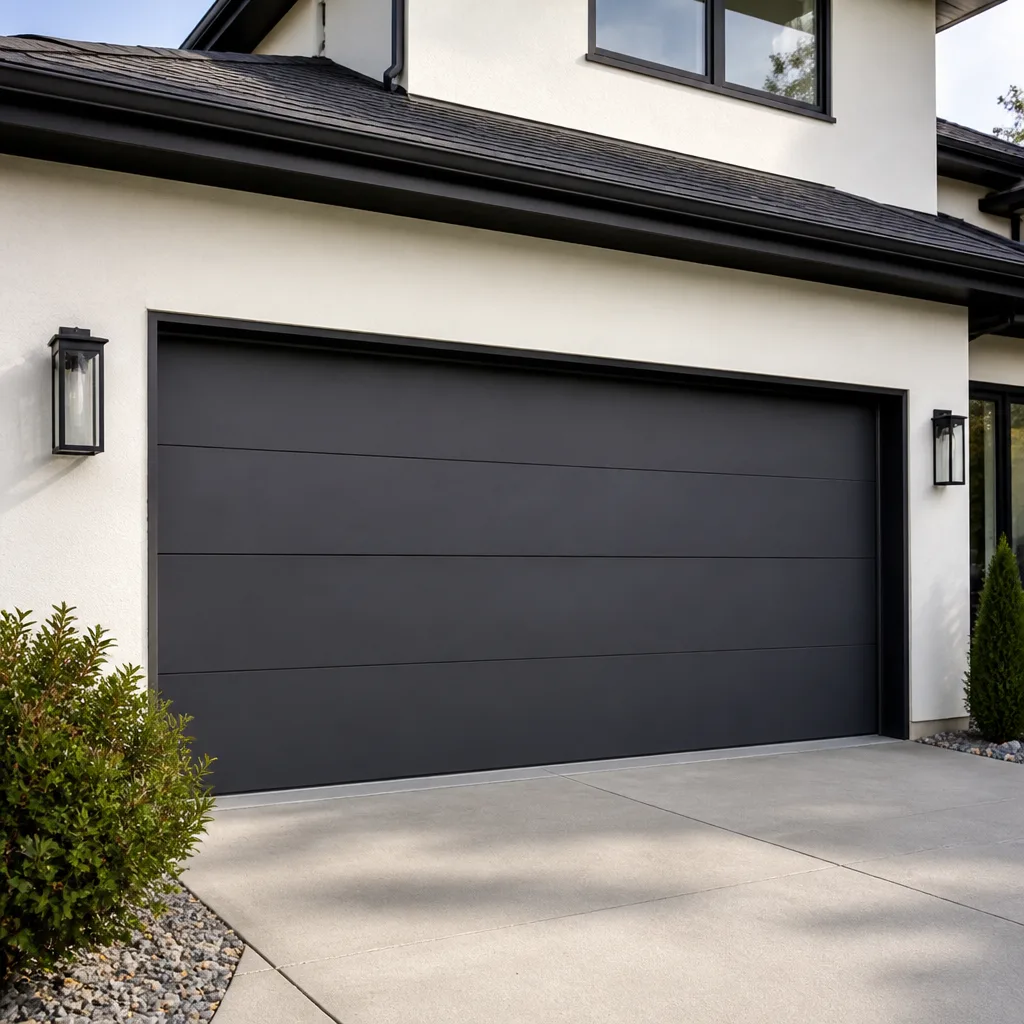 Modern flush
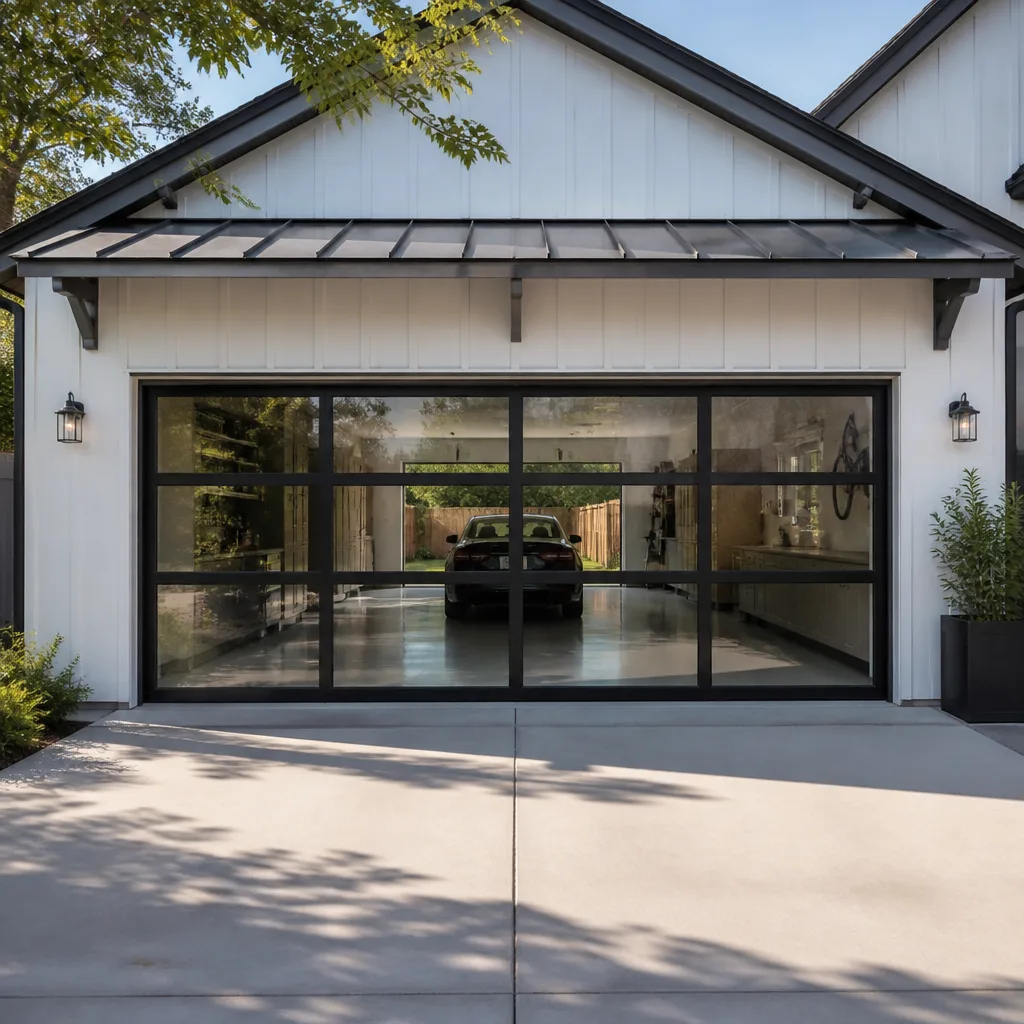 Full-view glass
 LiftMaster openers
 Chamberlain openers
Full 25-point door and opener safety check with every visit - springs, cables, rollers, tracks, and your LiftMaster or Chamberlain opener included
You get a price before we start. It does not change when the pro arrives.
Get your free estimateGarage Door Warning Signs: A Hamilton Homeowner’s Reference Guide
A garage door that’s “a little slow” isn’t a nuisance. It’s frequently the first sign of a spring that’s lost tension and is forcing the opener motor to compensate for a door that now weighs far more than it should. By the time the door stops entirely, that motor has often been damaged too, and a repair that started as one part turns into two or three. The early warning was never vague. It just wasn’t interpreted. This guide teaches you to read symptoms as a system, so you can tell a spring problem from a track problem from an opener problem, and know which warnings mean “watch it” and which mean “stop using the door today.” If you’re in Hamilton and your door is talking to you, this is how to listen.
Quick Answer
Most garage door failures announce themselves days or weeks in advance through a small set of repeatable signals: a door that moves slower than it used to, a grinding or popping noise that changes with temperature, a door that reverses before touching the floor, or visible wear on cables, rollers, and hinges. The key is reading these signals together, not one at a time. Any door that is crooked, off its track, or making a loud bang should be taken out of service and looked at by a professional before it’s used again.
Styles & brands we work with
- Raised-panel steel
- Carriage house
- Modern flush
- Full-view glass
- LiftMaster openers
- Chamberlain openers
Table of Contents
- Why You Should Read Patterns, Not Symptoms
- Telling Apart a Spring, Track, and Opener Problem From the Ground
- The Sound Profile: What Each Noise Is Telling You
- Why Your Door Reverses Before Hitting the Floor in Winter
- Visual Warning Signs: 30-Day Warnings vs. Stop-Use Conditions
- Safe to Monitor vs. Stop Using It Now
- How Hamilton Weather and Housing Shape What You’ll See
- Monthly Checks You Can Do Safely From the Ground
Why You Should Read Patterns, Not Symptoms
A grinding noise means one thing if it’s steady and unchanging. It means something entirely different if it only appears on cold mornings. And it means something urgent if it shows up alongside a door that’s started drifting to one side. Same noise. Three different diagnoses. That’s the trap of checking symptoms against a list: the list can’t see your door, and it can’t see the combination.
A garage door is a system with five moving parts that all depend on each other. The springs carry the door’s weight. The opener supplies the push. The tracks guide the panels. The rollers keep the panels moving smoothly inside the tracks. The cables hold the whole thing together under tension. When one part starts to fail, it changes how the others behave, and that change is what produces the symptom you hear or see. A failing spring makes the opener work harder, which makes the motor louder, which makes the door slower. If you only hear “loud motor,” you might replace the opener. If you read the pattern, you check the spring first.
Reading patterns is also what keeps you safe. Some symptoms are cosmetic or early. Others mean the door is one cycle away from a dangerous failure. The difference usually comes down to whether the symptom is consistent (happens every time, same way) or erratic (comes and goes, changes with weather, changes with door position). Consistent, mild symptoms are usually the ones you can monitor for a few weeks. Erratic symptoms, or anything paired with a crooked door, belong in the stop-use category.
Here in Hamilton, we see this play out most often on older doors attached to homes built in the 1970s and 1980s, where the original springs have cycled tens of thousands of times. Homeowners frequently describe the door as “just sounding old.” It’s rarely the door. It’s almost always one component telling you it’s tired before it fails. Our team at Hamilton Garage Door Repair Co works with every major brand on those doors – LiftMaster, Chamberlain, Genie, Clopay, Amarr, Wayne Dalton, Craftsman, and Raynor – so diagnosing by pattern rather than by brand guesswork is exactly what we do.
Telling Apart a Spring, Track, and Opener Problem From the Ground
You can narrow down most garage door problems without touching anything, using only what you can see and hear from a safe distance on the garage floor. The goal is to identify which of the three main systems is failing: the springs, the tracks, or the opener. Here’s how to separate them.
Spring symptoms (the most common cause of a slow or heavy door)
- The door feels or sounds like it’s straining, and the opener motor is louder than it used to be.
- The door opens slowly but closes normally (or the reverse). A partially broken torsion spring can leave one side working and one side failing.
- You hear a single loud bang from the garage, sometimes loud enough to be heard from inside the house, and afterward the door won’t lift at all.
- The door is heavier to lift by hand than it should be (if your opener has a manual release and you can safely test the door by hand with the opener disconnected, a door that won’t stay up on its own points to springs).
Springs are the most dangerous part of the system. Torsion springs store an enormous amount of energy, and a spring under tension can cause serious injury if handled without the right tools and training. If you suspect a spring problem, do not attempt to adjust, wind, or replace a spring yourself. This is the one part of the door where the correct first move is always to call a professional. Spring replacement is a specialty within the trade, and we treat it that way.
Track symptoms
- The door binds or catches at a specific point in its travel, then continues.
- The door looks visibly crooked, with one side higher than the other.
- You can see a bend or kink in one of the vertical or horizontal tracks.
- Rollers pop out of the track or the door shudders as it moves past a certain spot.
A bent track is often caused by an impact (a car bumper, a bike, a stored ladder) or by a door that’s been running off-balance for a while. Track problems can sometimes be adjusted, but a door that has jumped the track is a stop-use condition – operating it can bend panels and put the door at risk of coming down.
Opener symptoms
- The motor runs but the door doesn’t move, or moves only a few inches and stops.
- The door operates fine by hand but won’t respond to the remote or wall button.
- You hear a clicking or humming from the opener unit with no door movement.
- The door reverses immediately after starting to close, even with nothing in the way.
If the motor runs but the door doesn’t, that’s usually a stripped drive gear or a broken drive belt or chain, not a spring. If the door moves fine by hand but not by remote, that’s a control or safety-reversing issue. Opener problems are what we handle through garage door opener repair, and many are quick fixes once the right part is identified.
The Sound Profile: What Each Noise Is Telling You
Every part of a failing garage door makes a distinctive sound. If you can match the sound to the part, you’ve done most of the diagnosis before anyone arrives. Here’s how to listen.
- A sharp, loud bang from the garage, followed by silence. This is the classic sound of a torsion spring breaking. The door will usually feel extremely heavy or won’t lift at all afterward. Stop using the door and call for spring service.
- A metallic twang or “ping” during operation, occasionally, not every time. This is often a cable that’s fraying or a spring that’s starting to lose tension unevenly. A cable about to snap doesn’t always announce itself with a bang – it can give a series of small pings or pops as the strands separate. This is a stop-use sign; a snapped cable can whip and cause injury.
- A grinding, scraping, or squealing sound that gets worse over weeks. This usually points to dry or worn rollers, or a roller that’s worn down to the axle. A roller grinding on its shaft is a maintenance issue you can monitor briefly, but a roller worn to the axle needs replacement before it fails and drops the door panel out of alignment.
- A rhythmic clicking or clunking that syncs with the door’s movement. This is frequently a worn hinge, a loose bracket, or a roller that’s jumped slightly. It’s usually a “monitor and repair soon” sound, not an emergency.
- A humming or grinding from the opener unit itself, with the door not moving. This is the sound of a stripped gear or a failed drive belt inside the opener. The opener needs service; the door itself is likely fine.
- A popping or cracking sound that only happens in cold weather. Cold weather stiffens lubricant and contracts metal. Popping that appears only in winter and disappears in spring is often a lubrication or adjustment issue, not a failing spring – though a spring that’s near the end of its life can also fail on the first cold morning. The combination of cold-weather popping plus a suddenly slow door is the pattern that points to a spring problem.
One sound tells you a lot. Two sounds together tell you almost everything. If you hear a grinding noise and the door is also drifting to one side, you’re no longer in “one worn part” territory – you’re in “something is off-balance and the tracks are taking the strain” territory. That’s a pattern, and patterns are what let a specialist give you a straight answer instead of a guess.
Why Your Door Reverses Before Hitting the Floor in Winter
When a garage door reverses before reaching the floor in cold weather, the safety sensors are almost never the cause. The most common reason is that the door is encountering resistance on the way down – usually from stiff, cold-contracted hardware, a track that’s slightly misaligned, or a door that’s running off-balance – and the opener’s safety-reversing feature is doing exactly what it’s designed to do: stopping the door because it senses an obstruction.
The safety sensors themselves (the two small lenses near the bottom of the tracks) work by detecting an interruption in an invisible beam. If the beam is blocked by something, the door won’t close at all – it usually reverses immediately at the start, not at the floor. A door that closes most of the way and then reverses at the bottom is reading resistance in the door’s travel, not a blocked beam.
In Hamilton, this shows up most in the late fall and early winter, when the first hard cold snap arrives and the grease in the rollers and hinges thickens. A door that was barely keeping up in October can start reversing in December. The pattern to watch for:
- Reversal only in cold weather: likely a lubrication and adjustment issue, worth a service call before it gets worse.
- Reversal at the same spot every time, cold or warm: likely a track or balance problem.
- Reversal plus a door that looks slightly crooked: stop using it.
- Reversal that started suddenly after a loud noise: suspect a spring that has partially failed.
The fix isn’t to force the door closed or to hold the wall button down – some older openers allow that, and it’s how people damage panels and burn out motors. The fix is to have the door checked so the resistance is identified and resolved. If your door has started reversing, our garage door repair service is built around exactly this kind of diagnosis.
Visual Warning Signs: 30-Day Warnings vs. Stop-Use Conditions
Some warning signs you can see without hearing anything. The important distinction is between signs that predict a failure within roughly the next month and signs that mean the door should not be operated at all until it’s repaired. Here’s how to sort what you’re looking at.
Signs that predict failure within about 30 days (monitor and book service)
- Frayed or worn cables. Look at the cables running along the sides of the door. If you see individual strands separating or a cable that looks fuzzy, it’s wearing through. Book service soon – don’t wait for the snap.
- Rollers that look worn or flat-spotted. Nylon rollers can develop flat spots; steel rollers can wear thin. Both cause noise and uneven movement.
- Loose hinges or brackets. A hinge that wiggles by hand is a hinge that will eventually work its bolts loose or break.
- Visible gaps or daylight under a closed door. This can be a weather seal issue, but it can also mean the door isn’t sitting level.
- A torsion spring that looks stretched or has a visible gap in its coils. Springs don’t always break with a bang – some lose tension gradually.
Stop-use conditions (don’t operate the door until repaired)
- A visibly bent or disconnected track. The door can come off the track and fall.
- A door that is crooked or hangs unevenly. The panels are taking strain they weren’t designed for.
- A snapped cable. The door is no longer safely supported.
- A door that has come out of its tracks. Do not try to force it back in.
- A loud bang followed by a door that won’t lift, or lifts very heavily. Classic broken-spring indicator.
- Any door where you can see the bottom panel is separating from the rest. That panel can come down.
If you’re not sure which category your door is in, the safe default is to leave it closed (or open, if it’s already open) and call for an assessment. A door that isn’t moving can’t hurt anyone.
Safe to Monitor vs. Stop Using It Now
The hardest judgment call for a homeowner is whether a warning sign is “keep an eye on it” or “don’t touch it until someone looks at it.” Here’s a simple decision process you can run from the garage floor.
- Does the door move smoothly and evenly when it operates? If yes, and the only issue is noise, a slow spot, or a remote that doesn’t respond, it’s usually safe to monitor for a short period while you book service.
- Is the door crooked, off-track, or making a repeated loud bang? If yes, stop using it. Call for service.
- Can you see a frayed cable, a bent track, or a clearly damaged spring? If yes, stop using it. These are the parts that can cause injury or a door to fall.
- Did the problem appear suddenly after a loud noise? If yes, stop using it. Sudden failures are rarely cosmetic.
- Is the problem only in cold weather and the door otherwise moves evenly? This is usually safe to monitor for a few days while you schedule a service visit – but don’t ignore it through the whole winter.
- Is the door still under a manufacturer’s warranty? Call the manufacturer’s authorized service network or a specialist before attempting fixes that might void it.
The pattern is simple: movement problems and visible structural damage mean stop. Sound problems and control problems mean book service. And if you ever have to talk yourself into believing a door is safe, that’s the sign to have someone look at it.
How Hamilton Weather and Housing Shape What You’ll See
Garage doors fail in predictable ways depending on climate and the age of the home, and Hamilton has a specific combination worth knowing about.
Hamilton’s winters bring repeated freeze-thaw cycles. That matters for garage doors in two ways. First, the metal in tracks and springs expands and contracts with temperature swings, which can loosen brackets and shift the door out of alignment over a season. Second, the rubber weather seal at the bottom of the door can stiffen and crack, letting cold air and moisture in, which accelerates wear on the bottom panel and the hinges nearest the floor. If you notice your door getting noisier every January, this is often why.
Hamilton’s housing stock spans a wide range of ages, and that shapes what breaks. Older homes often have original wood or steel doors with extension springs (the springs that run along the horizontal tracks). Those springs can fail without the dramatic bang of a torsion spring, which means the symptom is more likely to be a door that starts feeling heavy or slow. Newer construction usually has torsion springs mounted above the door, which tend to fail with a clear bang and an immediate inability to lift the door. Knowing which type your door has helps you interpret the symptom.
Summer humidity also plays a role. In the warm months, wood doors can swell slightly and bind against the frame, producing a scraping or sticking sound that isn’t a spring problem at all. If your door only sticks in humid weather and moves freely in dry weather, the issue may be the door material, not the hardware. A specialist can tell the difference quickly, which saves you from replacing parts that aren’t the problem.
When Hamilton homes are ready for a new door, that’s a scheduled, measured job rather than a repair – garage door installation involves a free measure and a written price before any work begins. And because we service every major brand on the market, you don’t have to switch to a different opener or door brand to get expert attention.
Monthly Checks You Can Do Safely From the Ground
A five-minute inspection each month catches most of the warning signs early. These are all safe, ground-level checks – nothing that involves touching springs, cables, or the opener’s internal mechanisms.
- Look at the door when it’s closed. Does it sit flat against the floor? Is there daylight showing under one side? A door that isn’t level is a door that’s running off-balance.
- Watch it move. Run the door and watch from a safe distance. Does it move smoothly and evenly, or does it shudder, slow, or drift to one side?
- Listen. Note any new sound. Compare it to what the door sounded like last month. A new sound is a warning; an old, steady sound is a maintenance note.
- Check the rollers and hinges visually. You’re looking for wobble, cracks, flat spots, or anything that looks loose. Don’t tighten or adjust – just note.
- Look at the cables. Are they smooth and even, or do you see fraying or individual strands separating?
- Test the safety reversing feature. Place a small object like a block of wood in the door’s path and close it. The door should reverse on contact. If it doesn’t, the safety feature needs attention.
- Test the balance by hand (only if safe). With the opener disconnected and the door halfway up, the door should stay put. If it drops or rises on its own, the springs need attention – call a professional.
These checks take a few minutes and catch the small issues before they turn into a stop-use condition. If you find something in step 5, 6, or 7, that’s your cue to call.
Common Mistakes to Avoid
- Treating a slow door as a motor problem. A door that’s getting slower is far more often a spring losing tension than a failing opener. Replacing the opener first is the most expensive way to fix a spring problem, and it delays the actual repair.
- Forcing a door that has jumped the track. Pushing or pulling the door back into the track can bend panels and put the door at risk of falling. If it’s off-track, stop and call.
- Ignoring a single loud bang. A bang from the garage that you can hear from the kitchen is usually a broken spring. If the door then won’t lift, don’t keep trying – the opener will run against a door that won’t move and can be damaged too.
- Holding the wall button down to force a reversing door closed. This is how people damage panels and burn out opener motors. The reversing feature is there for a reason.
- Spraying lubricant into a track or onto a spring to quiet a noise. Lubricant in the wrong place can attract grit, make tracks slippery in a way that lets rollers slip, and mask the real problem. Use lubricant only where the manufacturer specifies, and only if you’re sure of the source of the noise.
- Assuming a cold-weather sound is just the weather. In Hamilton, a popping noise that starts with the first cold snap often means the door is telling you something. If the noise appears with the cold and stays until spring, book a service call.
- Waiting for a full failure before calling. The whole point of reading warning signs is to catch the problem while it’s still a repair, not after it’s become a repair plus a new opener plus a damaged panel.
See the difference
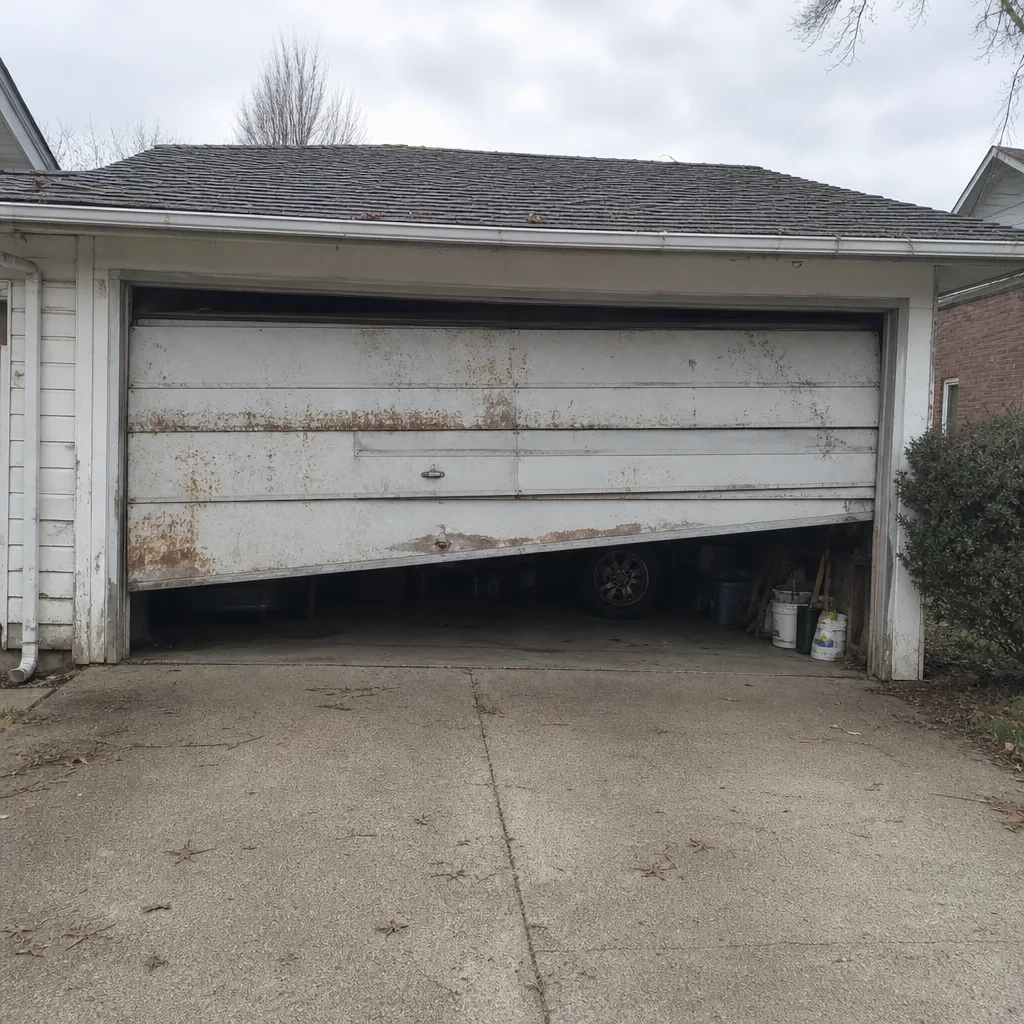 Before
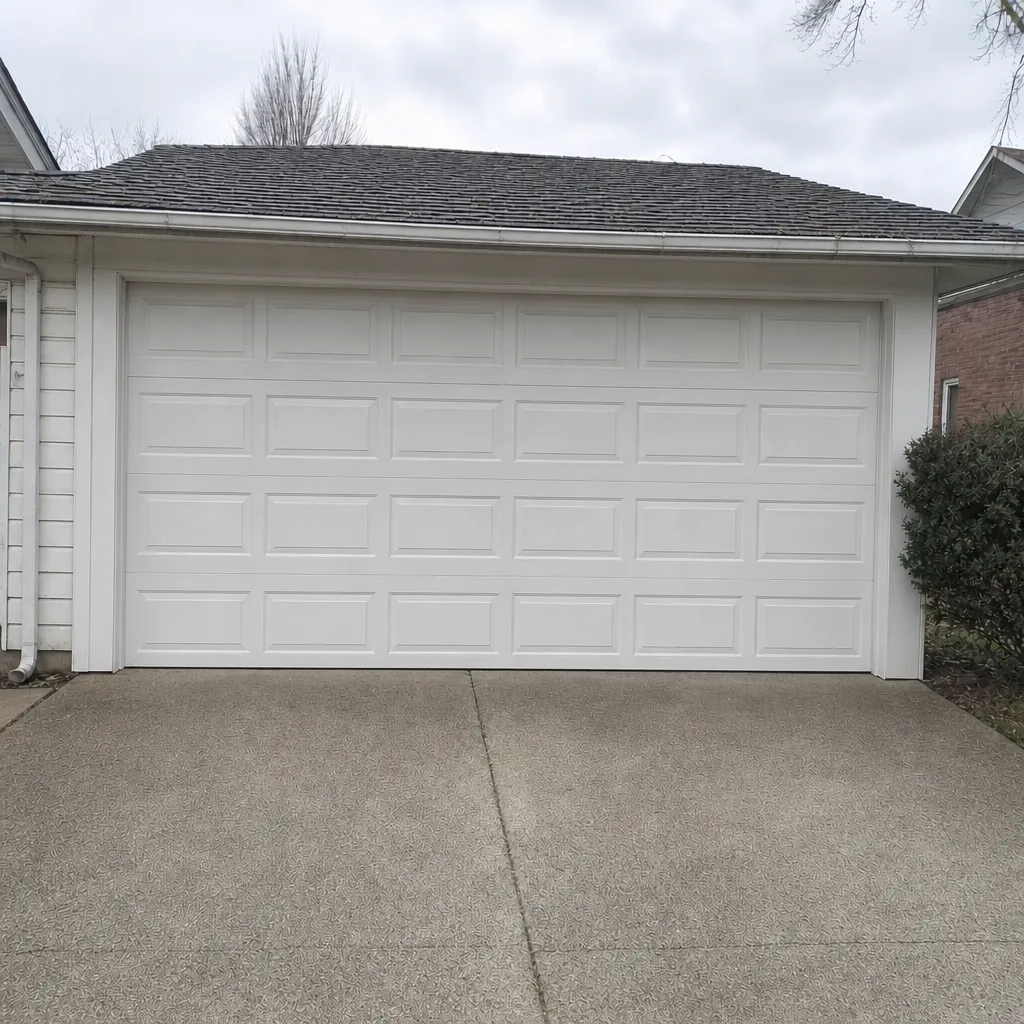 After
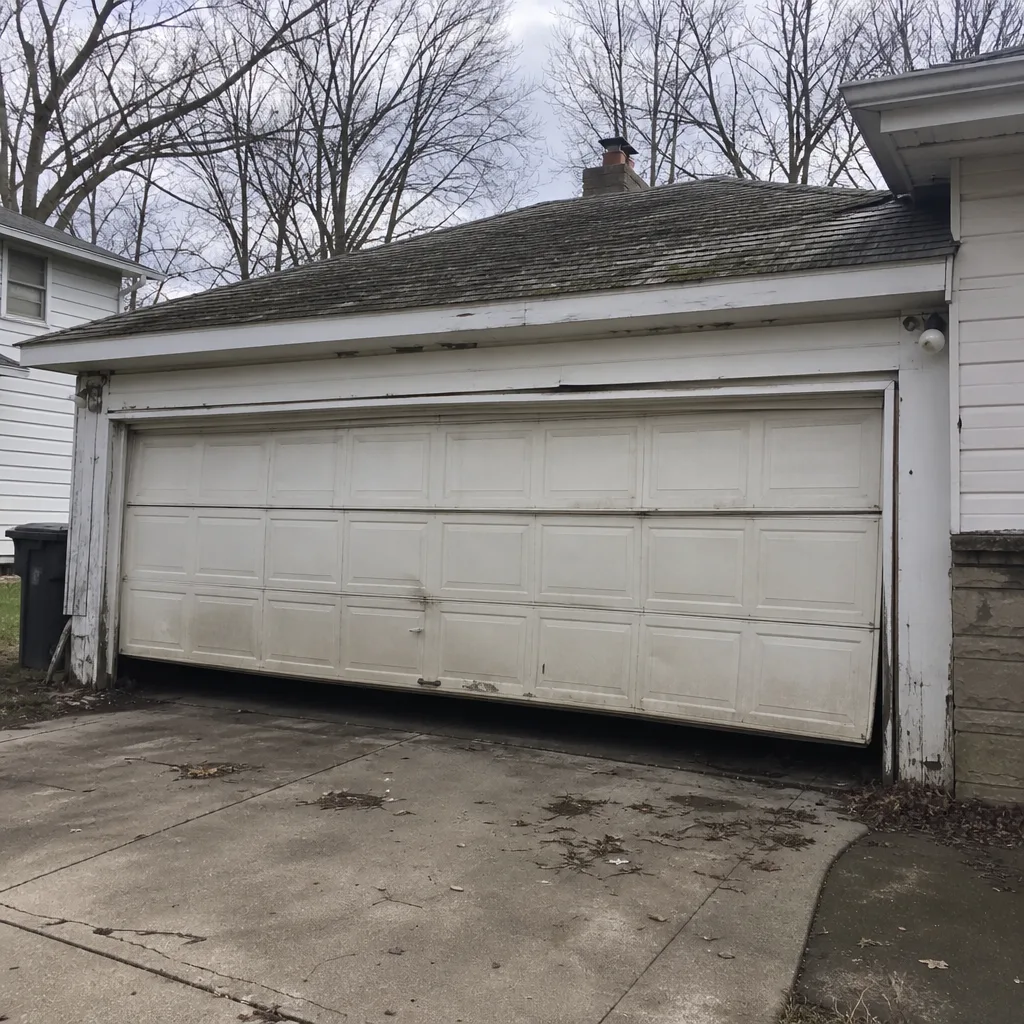 Before
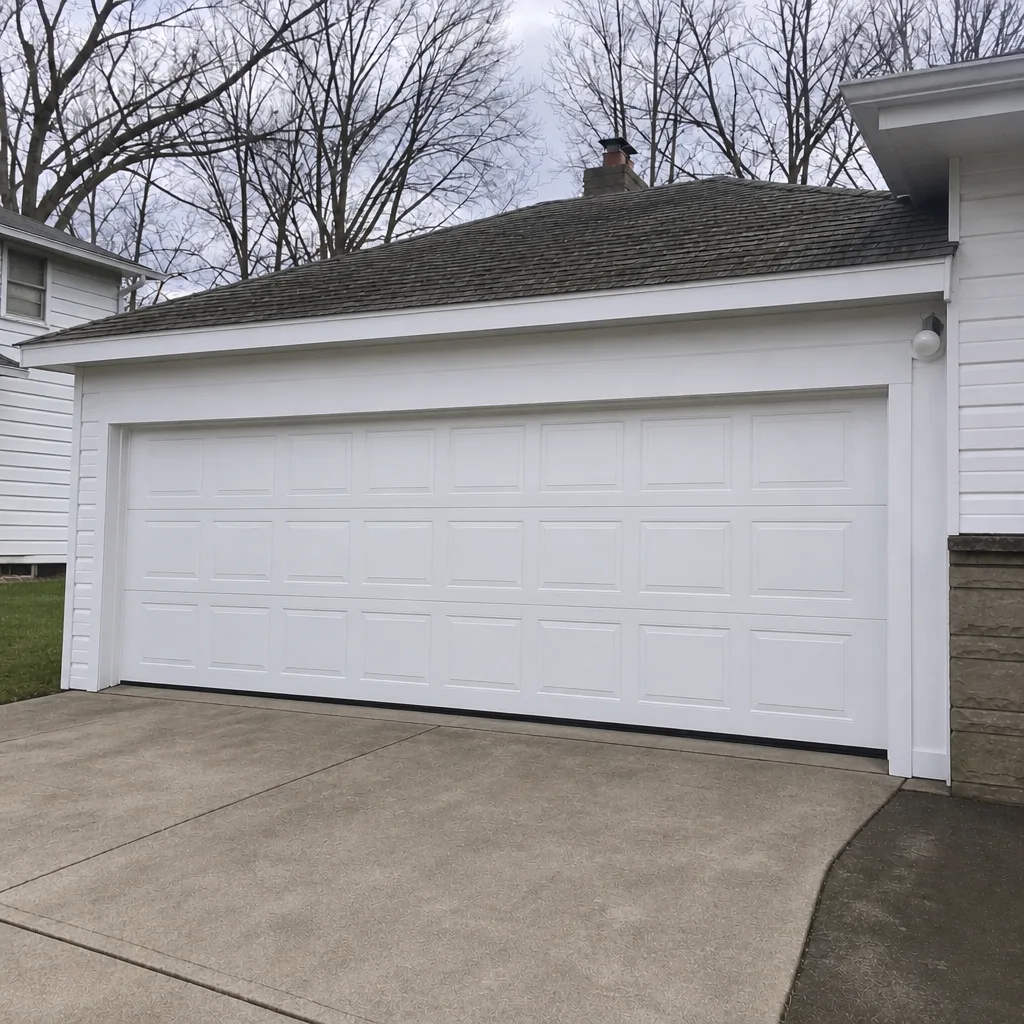 After
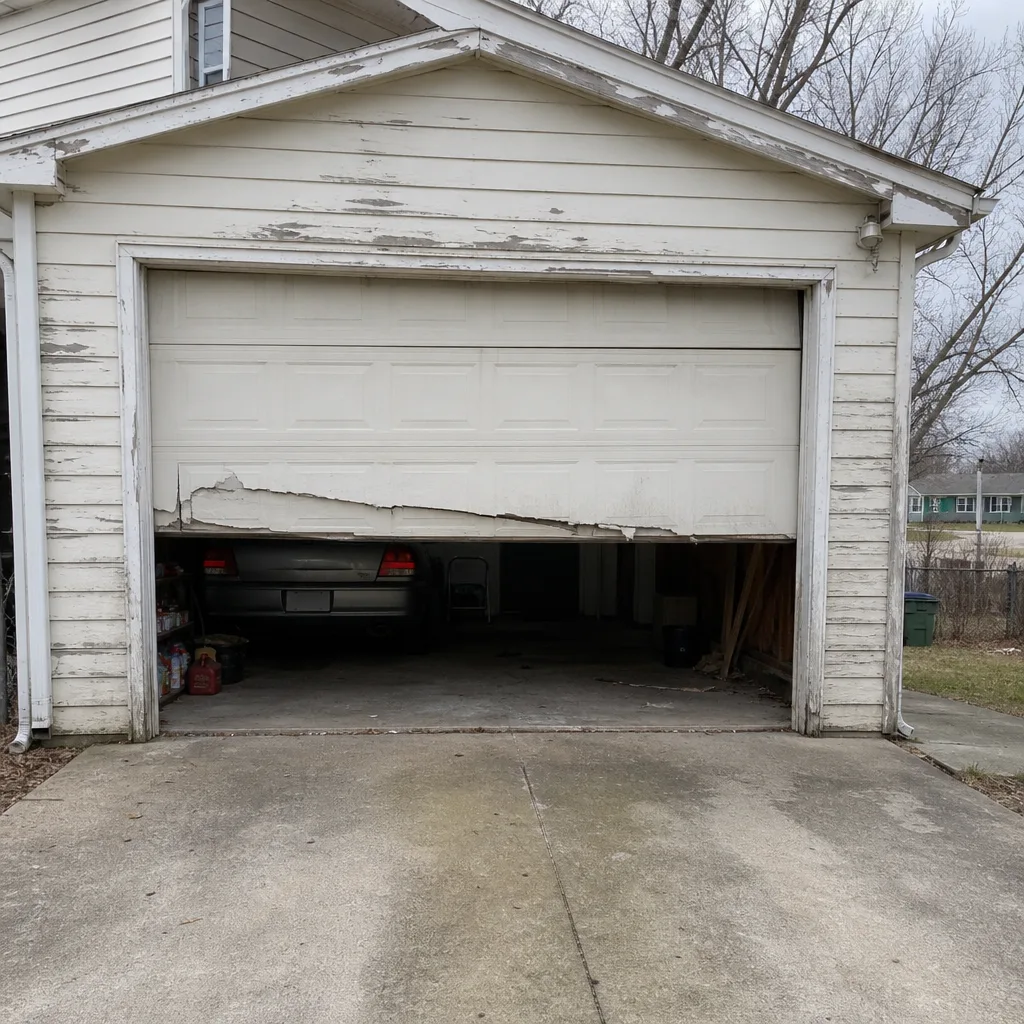 Before
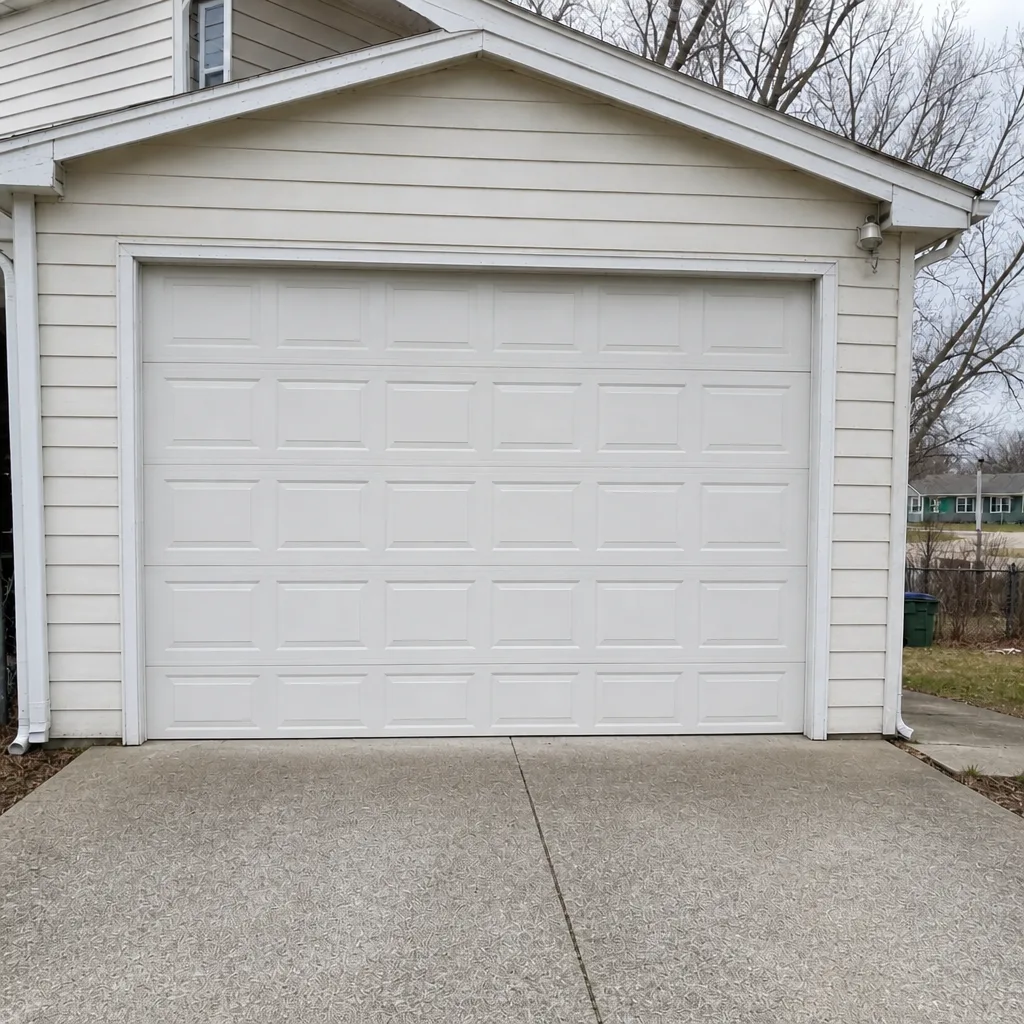 After
When to Call a Professional
Some problems are maintenance items you can note and monitor. Others are calls for a trained garage door specialist. Call us when you hear a loud bang from the garage, see a frayed cable or bent track, notice the door is crooked or off-balance, or the door reverses in cold weather and doesn’t stop on its own. Call when the opener runs but the door won’t move, or when a door has come off its tracks. Call when you’re not sure, too – the cost of an assessment is far lower than the cost of a door that fails unexpectedly. Hamilton Garage Door Repair Co offers free estimates in Hamilton. Call (833) 482-6774. We answer 24/7. Fast dispatch from 7am to 7pm, Sunday through Friday.
Our technicians have up to 8 years of experience, we’re certified to service eight of the top brands on the market, and we work on whatever brand is already on your home. Your door, your brand, we work on it.
Frequently Asked Questions
If the opener motor runs but the door doesn’t lift, or the door feels extremely heavy when you try to lift it by hand with the opener disconnected, the spring is usually the problem, not the opener. If the door moves fine by hand but won’t respond to the remote, the opener is the likely culprit. A loud bang followed by a door that won’t lift is the classic broken-spring pattern. Either way, springs are the dangerous component – don’t attempt to adjust or replace one yourself. Call (833) 482-6774 for a free estimate.
Usually not. In winter, a door that reverses near the floor is most often encountering resistance from stiff, cold hardware, a slightly misaligned track, or a door that’s running off-balance. The safety sensors themselves, if blocked, typically stop the door at the start of its travel, not at the bottom. A door that reverses at the floor needs its resistance and balance checked. Call (833) 482-6774 to have it looked at.
Movement problems and visible structural damage mean stop using the door: a crooked door, a bent track, a snapped cable, a door that has come out of its tracks, or anything that happened after a loud bang. Sound problems, a slow door, and control issues usually mean book service, then monitor briefly. If you’re ever unsure which category you’re in, stop using the door and call.
It depends on the part and the job, but every repair is quoted for your specific door before any work starts. You’ll get a written estimate, agreed before we begin, so the price you’re told is the price you pay for the agreed work. The estimate is free. Call (833) 482-6774 for your exact price.
Often, yes. Same-day service is available for many repairs, and emergencies are handled as a core part of what we do. We answer 24/7. Fast dispatch from 7am to 7pm, Sunday through Friday. If you call outside dispatch hours, we’ll book you into the next opening.
Almost certainly. We’re certified to service LiftMaster, Chamberlain, Genie, Clopay, Amarr, Wayne Dalton, Craftsman, and Raynor, and we work on whichever brand is already installed on your home. There’s no need to switch brands to get specialist attention. Call (833) 482-6774 and tell us what’s on your door.
That’s exactly what a diagnosis is for. If the door is making a new sound, moving slower than usual, or has started reversing in cold weather, a professional check tells you whether it’s a repair that can wait, a repair that should be booked soon, or a stop-use condition. The estimate is free, and it’s the cheapest way to know. Call (833) 482-6774.
The Bottom Line
Garage door warning signs make sense when you read them as patterns, not as a list. A slow door plus a noisy opener points to a spring. A bang plus a door that won’t lift points to a broken spring. A crossover noise that changes with weather often points to lubrication or balance. A crooked door with a bent track points to a stop-use condition. Your job is to notice the pattern early enough to call for repair before failure. If you’re in Hamilton and something about your door sounds or looks different, the fastest way to a straight answer is a free estimate. Call (833) 482-6774. We answer 24/7. Fast dispatch from 7am to 7pm, Sunday through Friday.
Written by the team at Hamilton Garage Door Repair Co.