
Last updated November 23, 2026
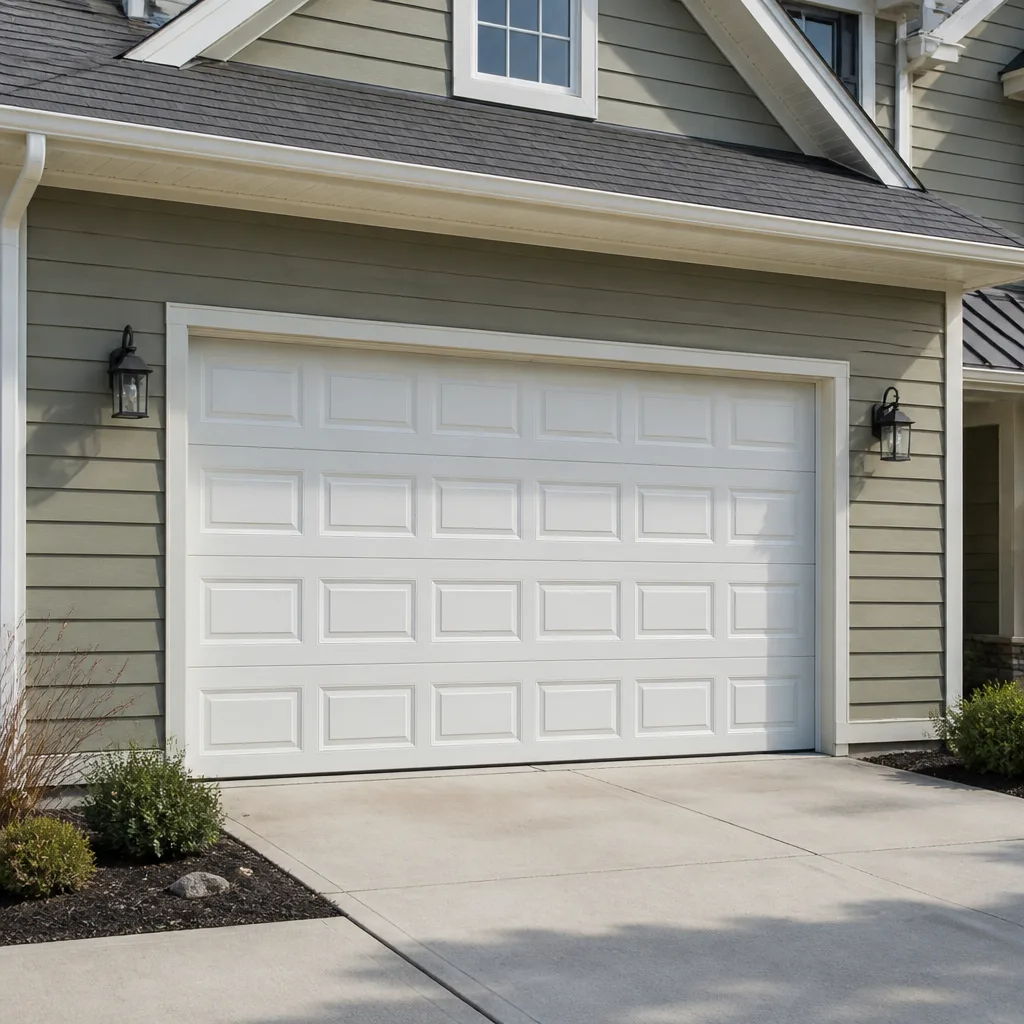 Raised-panel steel
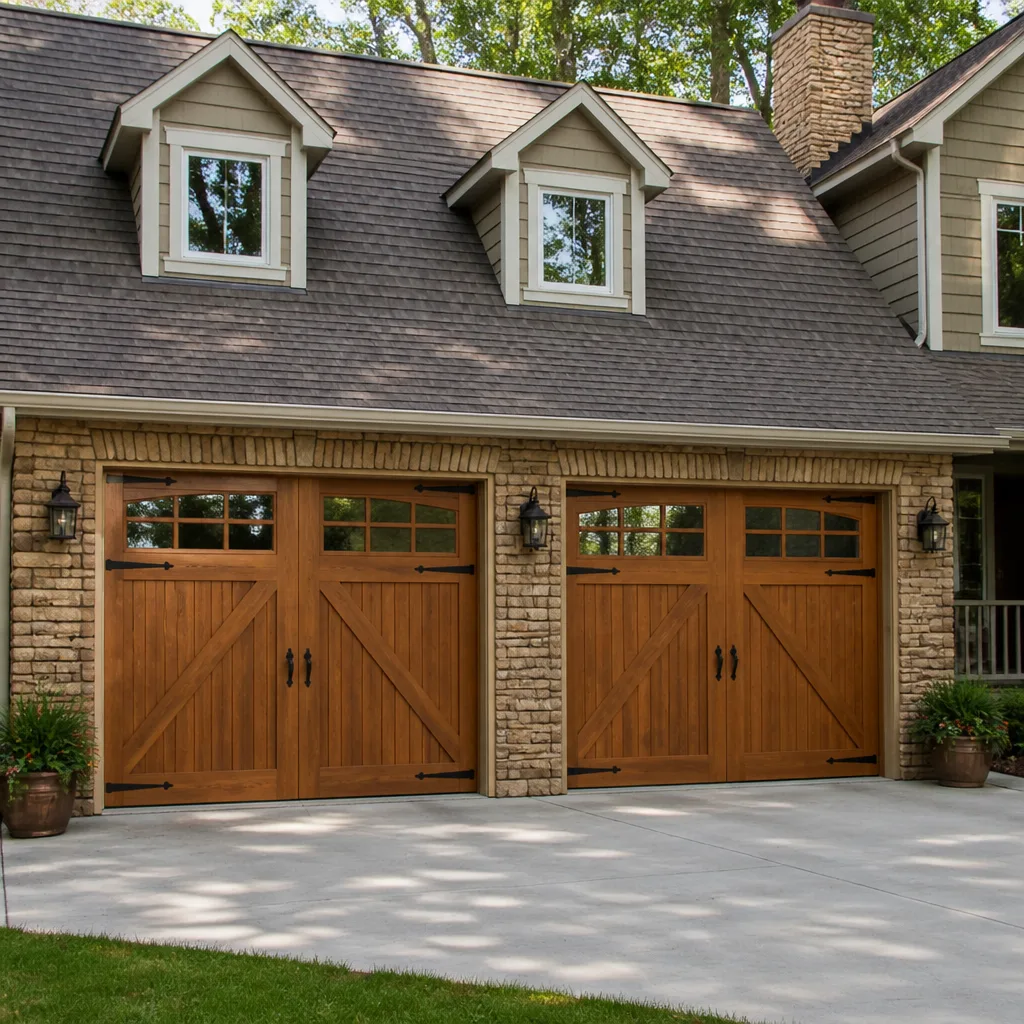 Carriage house
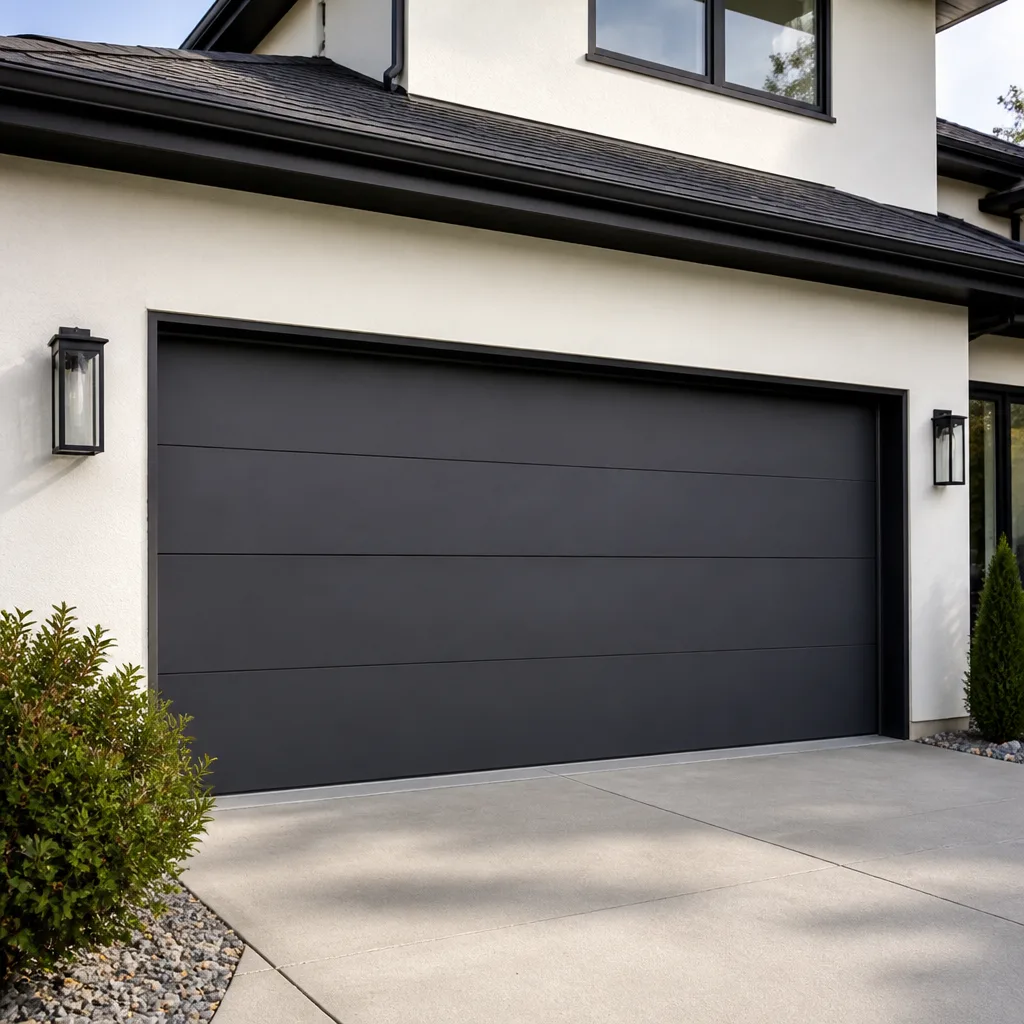 Modern flush
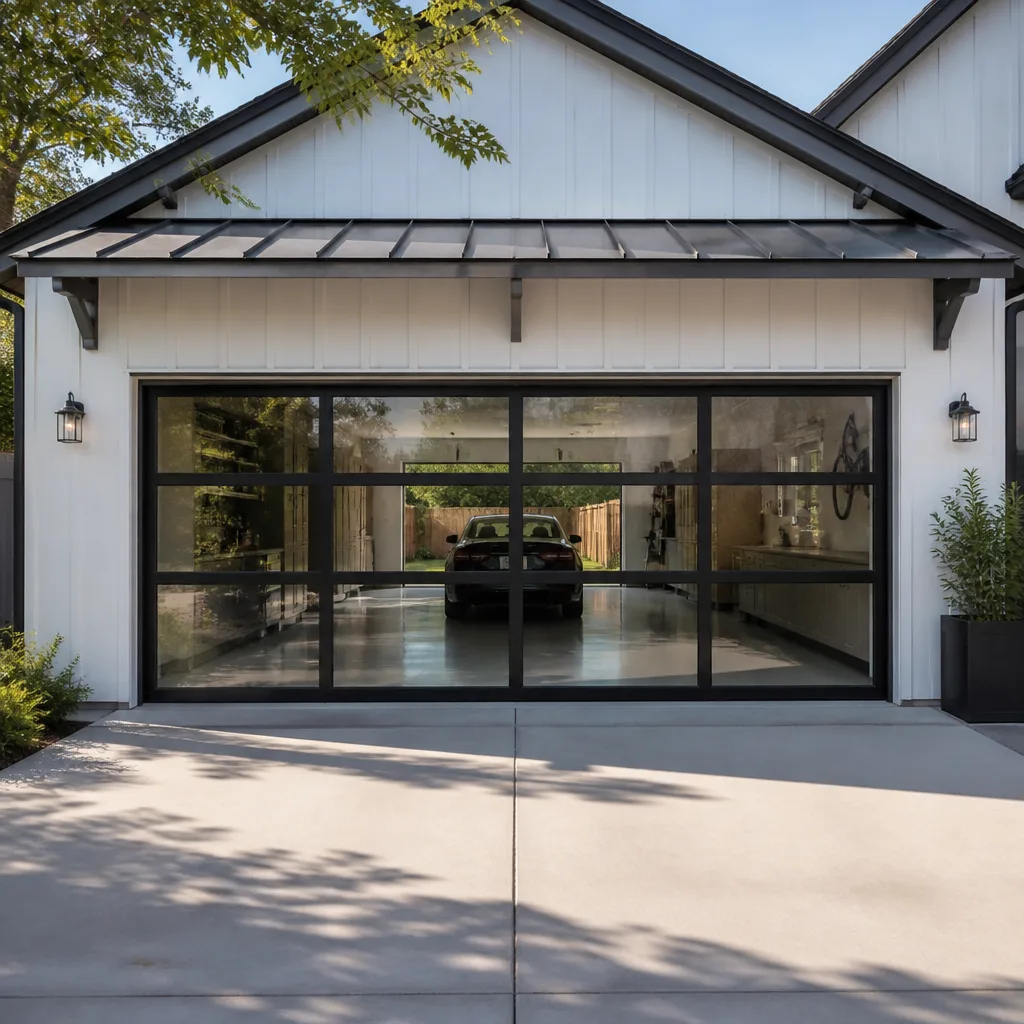 Full-view glass
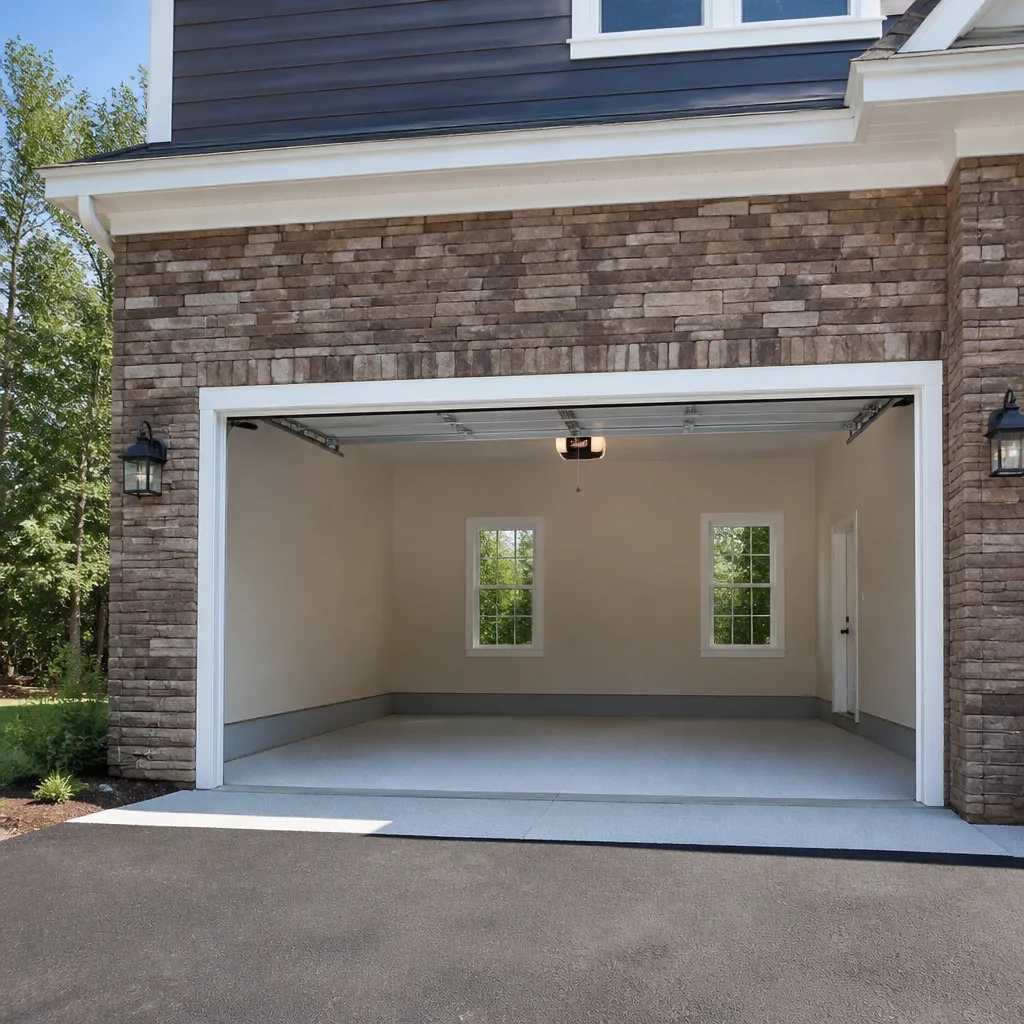 LiftMaster openers
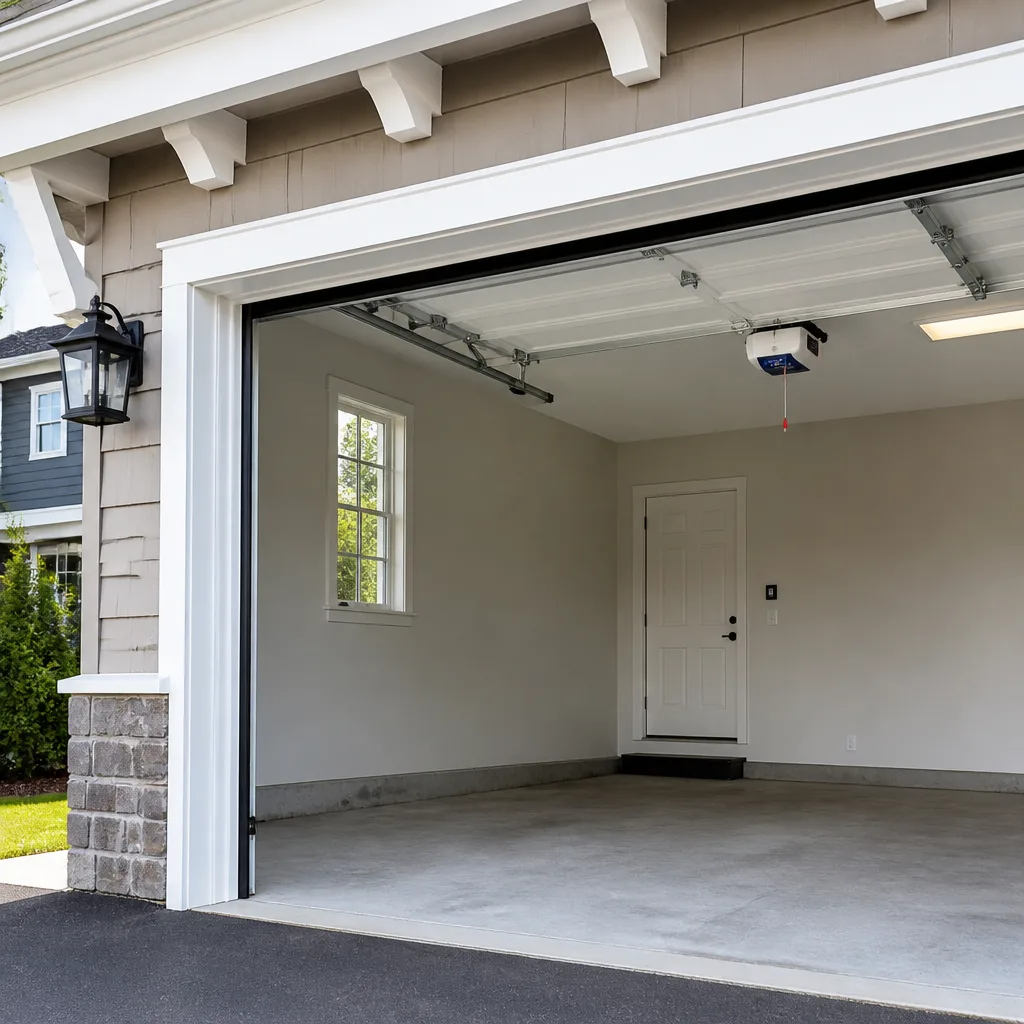 Chamberlain openers
Full 25-point door and opener safety check with every visit - springs, cables, rollers, tracks, and your LiftMaster or Chamberlain opener included
You get a price before we start. It does not change when the pro arrives.
Get your free estimateChoosing the Right Garage Door Brand: A Buyer’s Guide for Hamilton
Two garage doors can carry identical R-value ratings and still perform completely differently through a Hamilton winter. That happens because R-value measures the insulation layer, not the thermal bridging: the steel ribs, stiles and bottom brackets that a single-layer steel door uses as heat conduits straight through the panel. The brand name on the door rarely tells you which construction method sits behind it. This guide sorts the eight brands most Hamilton homeowners actually encounter – LiftMaster, Chamberlain, Genie, Clopay, Amarr, Wayne Dalton, Craftsman and Raynor – by the things that decide how a door behaves here: parts availability from regional distributors, how warranty claims actually get processed, steel gauge on base models, and insulation construction. Brand loyalty here is mostly a marketing outcome. Performance is a specification outcome, and that’s what we’ll walk through.
Quick Answer
There’s no single best garage door brand for Hamilton. The right brand is the one whose base-model construction matches your garage’s exposure, whose components are standards a local technician can source quickly, and whose warranty allows an independent servicer to do the work. For most Hamilton homes, that means a polyurethane-injected or thermal-break Clopay, Amarr or Raynor door at the mid and upper tiers, a Wayne Dalton or Genie system where budget and opener integration matter, and any brand as long as the installation is measured and detailed properly. If a brand’s hardware is proprietary and its warranty is dealer-tied, your long-term service options narrow, and that matters more than the logo on the panel.
Styles & brands we work with
- Raised-panel steel
- Carriage house
- Modern flush
- Full-view glass
- LiftMaster openers
- Chamberlain openers
Table of Contents
- Why Brand Reputation Matters Less Than Construction in Hamilton
- The Eight Brands Compared on the Criteria That Matter Locally
- Insulation Construction: Why R-Value Alone Won’t Keep a Hamilton Garage Warm
- Proprietary Hardware vs. Standard Components: The Hidden Cost of Brand Loyalty
- Wind Load Ratings and Butler County Weather Exposure
- Warranty Fine Print: What’s Covered and Who Can Service It
- Steel Gauge and Base-Model Construction By Price Tier
- How to Choose: A Step-by-Step Method for Hamilton Homeowners
Why Brand Reputation Matters Less Than Construction in Hamilton
Garage door brands spend heavily on the assumption that homeowners shop by logo. In practice, the structural difference between a well-installed door from a second-tier brand and a poorly-specified door from a first-tier brand is far larger than the difference between two first-tier brands. What determines how a door performs in Hamilton is the construction underneath the brand name: how many steel layers, what kind of insulation is inside, how the panels connect, and whether the bottom bracket and hinges are standard industry hardware.
Hamilton’s climate zone shapes the decision. This is southwest Ohio, with real freeze-thaw cycles through the winter and humid summers. That combination punishes:
- Single-layer steel doors with no insulation layer, because the interior face sweats in cold weather and rusts at the seams.
- Polystyrene-insert doors where the insert isn’t sealed at the edges, because the joints become cold bridges and the door flexes more when temperatures swing.
- Doors undersized on steel gauge, because a 24-gauge skin on a wide door dents under contact and ripples visibly.
None of that shows up in marketing copy, and none of it shows up in a showroom under fluorescent light. It shows up in February, when you’re standing in the garage and wondering why the door panels are frosty on the inside. So the useful question isn’t “which brand is best” but “which construction is right for my garage’s exposure at my budget.”
The good news, in our experience, is that most Hamilton homes can be served well by several brands. The one that fits is the one whose base model has the right layer count, the right insulation method, and hardware a technician can source without a special order. If you already have a door and want it fixed rather than replaced, the faster route is usually garage door repair rather than a brand change.
The Eight Brands Compared on the Criteria That Matter Locally
We’ve serviced LiftMaster, Chamberlain, Genie, Clopay, Amarr, Wayne Dalton, Craftsman and Raynor systems across Hamilton and the surrounding area. The eight break into two groups: door manufacturers (Clopay, Amarr, Wayne Dalton, Raynor) and opener and hardware brands (LiftMaster, Chamberlain, Genie, Craftsman). Some manufacturers offer both, but the service picture is different for each group.
How the Brands Sort on Local Criteria
- Clopay – Strong regional parts presence. Steel-backed, polyurethane-injected models are common in Hamilton replacement jobs, and the base-model gauge is generally honest for the tier. Warranty service usually routes through a dealer, so confirm who can service under it.
- Amarr – Dealer-purchased, so distribution varies by area, but the mid-tier polyurethane models hold up well in freeze-thaw. Base-model steel gauge is on the thinner side, which matters if your garage faces a driveway with real traffic.
- Wayne Dalton – Common in newer Hamilton subdivisions and detached garages, often paired with a Wayne Dalton-branded iDrive or Quantum opener. That opener pairing is worth understanding before you buy, because the torsion setup and hardware are tuned for the brand’s own components.
- Raynor – Steel and aluminum models with good structural design for larger doors. Regional distribution is narrower than Clopay, so parts sometimes take a day or two to source, but the components are largely standard.
- LiftMaster – The most common opener brand we see in Hamilton. Standard mounting hardware, widely stocked components, and ServicePlus-compatible parts. Very little proprietary dependency for a local technician.
- Chamberlain – Essentially the same family of technology as LiftMaster under a different brand and price tier. Parts are cross-compatible in practice and easy to source locally.
- Genie – Common in older Hamilton homes. Reliable for its era, but some older models use proprietary logic boards and remote frequencies that require brand-specific replacement parts rather than generic ones.
- Craftsman – Originally Chamberlain-manufactured, so many components interchange. The brand also sold a wide range of door hardware through retail, which means quality varies by which product line was installed.
What This Means Practically
If you’re replacing a door for the long haul in Hamilton, a Clopay, Amarr or Raynor door at the mid to upper tier is a sensible starting point. If you’re keeping an existing door and just replacing an opener, the opener brand matters more than the door brand, and LiftMaster or Chamberlain systems are the easiest to maintain. If you’re unsure what brand the door and opener already are, a local technician can usually identify both from the door’s model sticker or the opener’s head unit, and that’s the first step before choosing anything. For opener-specific issues, our garage door opener repair service is a better starting point than a brand comparison.
Insulation Construction: Why R-Value Alone Won’t Keep a Hamilton Garage Warm
R-value measures the insulation layer, not the whole door. That distinction is critical in Hamilton because a door’s real thermal performance depends on how well the insulation is installed inside the panel and whether the construction breaks the bridge between the inside face and outside face. There are three common insulation methods on the market, and they perform very differently through an Ohio winter.
The Three Insulation Methods
- Single-layer steel (no insulation) – A single sheet of steel with no core. Cheapest, but it transmits cold straight through the panel, and the interior face sweats when outside temperatures drop. Rarely the right call for a Hamilton garage that’s used as workspace or storage.
- Polystyrene insert – Rigid foam panels inserted into a two-layer steel door. Better than single-layer, but the panels can shift over time and the seams become thermal bridges if they aren’t sealed correctly. Common in entry-tier models from most brands.
- Polyurethane injected – Polyurethane foamed and cured in place inside the panel, bonded directly to the steel. Higher R-value per inch, no shifting, no seams to leak. Used in mid to upper-tier Clopay, Amarr and Raynor doors.
- Thermal break – The most advanced construction: a physical separation between the inside and outside steel faces so heat doesn’t conduct through the door’s frame. Used in the upper tiers of premium brands and often paired with injected polyurethane.
Which Brands Use Which Method By Price Tier
- Entry tier (single-layer or polystyrene) – Base-model Clopay, Amarr and Wayne Dalton doors. Fine for a detached garage that’s used for storage; not the best choice for an attached garage that acts as a buffer to the house.
- Mid tier (polyurethane injected) – Mid-range Clopay and Amarr models. This is where most Hamilton replacements land, and where the money is best spent.
- Upper tier (thermal break plus injected) – Top-end Clopay, Raynor and premium Amarr models. Worth the added cost if the garage shares a wall with living space or if you use it as a shop.
What this means for Hamilton: if your garage is attached to the house and you spend time in it, the polyurethane or thermal-break construction matters more than the R-value digit on the spec sheet. If your garage is detached and unheated, an entry-tier door with a polystyrene insert is genuinely adequate, and the extra money is better spent on a proper wind load rating. What matters in either case is that the door is measured and installed correctly – and that’s a function of the installer, not the brand. If you’re at the replacement stage, garage door installation is where the brand decision gets finalized.
Proprietary Hardware vs. Standard Components: The Hidden Cost of Brand Loyalty
Brands build long-term service dependency in two ways: through proprietary electronics and through proprietary hardware. Proprietary hardware is the subtler and, for Hamilton homeowners, the more expensive problem. If a hinge, bottom bracket or drum is a brand-specific shape, a local technician has to order it from the manufacturer or a distributor that carries that brand, and the door may be out of service for days while waiting on the part.
Standard vs. Proprietary by Brand
- Standard hardware (easy local sourcing) – LiftMaster and Chamberlain openers, Raynor doors, and most mid-range Clopay doors. Hinges, rollers, brackets, cables and drums are largely interchangeable with industry-standard equivalents.
- Mixed – Amarr and Wayne Dalton doors often use standard hardware but with brand-specific torsion setups and, in Wayne Dalton’s case, opener pairing that shapes which parts a technician can substitute.
- More proprietary – Some Genie and older Craftsman opener electronics use logic boards, remotes and limit switches that are brand-specific. The door hardware is usually standard, but the opener components aren’t.
What Proprietary Hardware Costs in Practice
The cost isn’t just the part. It’s the delay. A standard 2-inch roller can be sourced locally in an afternoon. A brand-specific roller or a matched pair of torsion springs on a proprietary drum may take two or three days to arrive from a regional distributor. For a Hamilton homeowner whose car is stuck in the garage, that delay matters more than the price difference between brands.
We’re brand-agnostic and we service all eight brands, which means the practical question isn’t “which brand do you prefer” but “what does your door actually have on it?” A technician can look at the door and tell you in minutes whether the hardware is standard or proprietary, and that answer shapes the whole repair path. If the door is stuck and the spring is the issue, the more urgent question is garage door spring repair, not the brand. Springs are the most dangerous part of the system and deserve a specialist regardless of brand.
Wind Load Ratings and Butler County Weather Exposure
Wind load rating is the amount of wind pressure a door is engineered to withstand, and it’s the spec that most Hamilton homeowners never look at. Butler County sits in a region where thunderstorms and the occasional strong frontal system bring real wind gusts. Detached garages and corner-lot homes take the highest exposure because they have less protection from neighboring structures and landscaping.
Where Wind Load Rating Actually Matters
- Detached garages – No windbreak from the main house. Wind load rating should be on the spec sheet.
- Corner-lot homes – The garage door faces the wind direction more often than on an interior lot.
- Wide or tall doors – A wider door has more surface area for wind pressure, so the rating matters more than on a standard single door.
- Doors with large glazing panels – Glass panels don’t carry load the same way steel does, so the engineered rating should account for them.
How to Evaluate the Rating
- Ask the manufacturer (or the installer) for the wind load rating on the specific model and size you’re considering, not the brand’s general line.
- Ask what the rating assumes about reinforcement – some ratings require specific struts or brackets to hit the number.
- Ask whether the rating applies to the door as installed, including the tracks and anchors. A rating on the door alone isn’t the whole install.
- Compare the rating against the exposure at your specific address, and if you’re uncertain, ask your city’s building department whether reinforcement is required for your configuration.
None of that requires you to be a structural engineer. It requires you to ask the question in the showroom and get an answer written on the quote. A serious installer will supply the rating without being pushed.
Warranty Fine Print: What’s Covered and Who Can Service It
Warranty is where brand loyalty gets expensive in the fine print. Manufacturers build warranties on three variables: what’s covered (the door, the finish, the hardware), for how long, and who’s allowed to service the claim. All three matter to a Hamilton homeowner, and two of the three usually get glossed over in the sales conversation.
What Most Warranties Actually Cover
- Door panels and structural components – Usually the longest coverage, often limited to defects in materials and manufacturing.
- Finish and paint – Typically a separate and shorter warranty with its own conditions.
- Hardware (hinges, rollers, brackets) – Often excluded or covered for a much shorter period. Read the hardware clause before you commit.
- Opener electronics – Usually a separate warranty from the opener manufacturer, not the door manufacturer.
The Dealer-Network Question
Some brands structure warranty service through an authorized dealer network. That’s fine as long as you know what it means: a local independent technician may not be able to submit a warranty claim on your behalf, and the claim may require you to go through the dealer that sold the door. Other brands allow any qualified servicer to perform warranty work, provided the parts are OEM. Before you buy, ask the specific question: “If this door fails within the warranty period, who is allowed to service it?”
The answer shapes how easy your life is for the next decade. We’re brand-agnostic, so we work on whatever is on your door, but a warranty condition that routes claims through a particular dealer is outside anyone’s control except the manufacturer’s. If a sales rep won’t answer the service question in writing, that’s a red flag worth taking seriously.
A related point: springs are almost never covered by the door manufacturer’s warranty. They’re a wear item, and they’re covered, if at all, under very short terms. If a spring fails, the brand question becomes moot and the practical question is who can replace it safely. See the spring repair page for details.
Steel Gauge and Base-Model Construction By Price Tier
Steel gauge is the thickness of the steel skin, and lower numbers mean thicker steel. A 24-gauge skin is thinner than a 25-gauge skin (in the industry convention where higher numbers mean thinner). That’s counterintuitive, so the practical version is: ask for the gauge number and compare like-for-like, because it varies by brand and price tier, and it’s the single biggest factor in how the door looks after a few Hamilton winters.
What to Expect By Tier
- Entry tier – Thinner skins, single-layer or polystyrene-insert construction, and often a shorter finish warranty. Adequate for a detached, unheated garage.
- Mid tier – Heavier skins, polyurethane-injected cores, better hinges and rollers. This is where most Hamilton replacements should land.
- Upper tier – Thickest skins, thermal-break construction, premium hardware and reinforced struts. Worth it for attached garages, wide doors, or homes where the door is part of the facade.
The mistake we see most often is paying upper-tier prices for entry-tier specs because of the brand name. A mid-tier door from a second-tier brand with proper gauge and polyurethane construction will out-perform an entry-tier door from a first-tier brand every winter in Hamilton. Ask for the gauge, the layer count and the insulation method in writing. If a brand can’t or won’t tell you, walk.
How to Choose: A Step-by-Step Method for Hamilton Homeowners
This is the order we’d suggest working through the decision. It moves from what you already own to what you actually need, then to what’s on the market, then to the install.
- Identify what you have. Find the model sticker on the door panel and the brand on the opener’s head unit. Knowing both is the foundation for every other decision.
- Decide whether you’re replacing or repairing. A door that dents and rattles but opens and closes isn’t a replacement candidate. A door with a failed spring, broken cable or a bent track is a repair-first situation.
- Assess your garage’s exposure. Attached or detached, heated or unheated, wind exposure from the driveway or corner lot, and how much time you spend in the garage. This drives the insulation and gauge tier.
- Get the construction spec in writing. Layer count, insulation method, steel gauge, wind load rating, hardware brand. A quote without these is a price tag, not a specification.
- Ask the warranty questions. What’s covered, for how long, and who can service a claim. Get it in writing.
- Ask the parts question. “If this door’s hardware needs to be replaced five years from now, how quickly can a local technician source it?” The answer tells you how much long-term service friction you’re taking on.
- Get the door measured properly. This is the step most people skip. A door sized by guesswork is a door that fits badly, and no brand overcomes a bad fit.
- Compare the installed price, not the door price. The door is a fraction of the installed cost. The installer, the tracks, the springs, the opener integration and the labor make up the rest, and the written estimate is what settles the final price.
For a Hamilton homeowner at the replacement stage, working through that list usually narrows the choice to two or three brands within a week. Working through it with a technician in the garage takes a fraction of that time, because most of the answers are on the door itself. If the door is still working well and you’re only chasing a quieter or more reliable opener, the better path is often garage door opener repair rather than a full replacement.
Common Mistakes to Avoid
- Buying by brand reputation alone. A well-specified second-tier door outperforms a poorly-specified first-tier door in every Hamilton winter. Ask for gauge, layer count and insulation method before the logo.
- Comparing R-values without comparing construction. A door with a high R-value and thermal bridging through the frame performs worse than a lower R-value door with thermal break construction. The number is not the whole story.
- Ignoring the wind load rating on a detached or corner-lot garage. Butler County gets real wind gusts, and a door without a wind load rating on a detached garage is a risk that costs more to fix than to prevent.
- Assuming the warranty covers the hardware. Springs, hinges, rollers and brackets are usually excluded or covered for a shorter period. Confirm the hardware clause before you commit.
- Buying a brand whose hardware is proprietary without knowing it. A future spring, roller or bracket replacement on a proprietary system can mean a multi-day wait for a part. Ask what hardware standard the door uses.
- Skipping the measurement. A door sized from a phone photo is a door that doesn’t fit. The measure is free and fast, and it’s the foundation of the install.
- Underestimating spring work. Springs are the most dangerous part of the door and are a specialist job whether the door is new or old. Do not attempt spring work yourself; the tension in a wound torsion spring is enough to cause serious injury. Call a trained professional.
See the difference
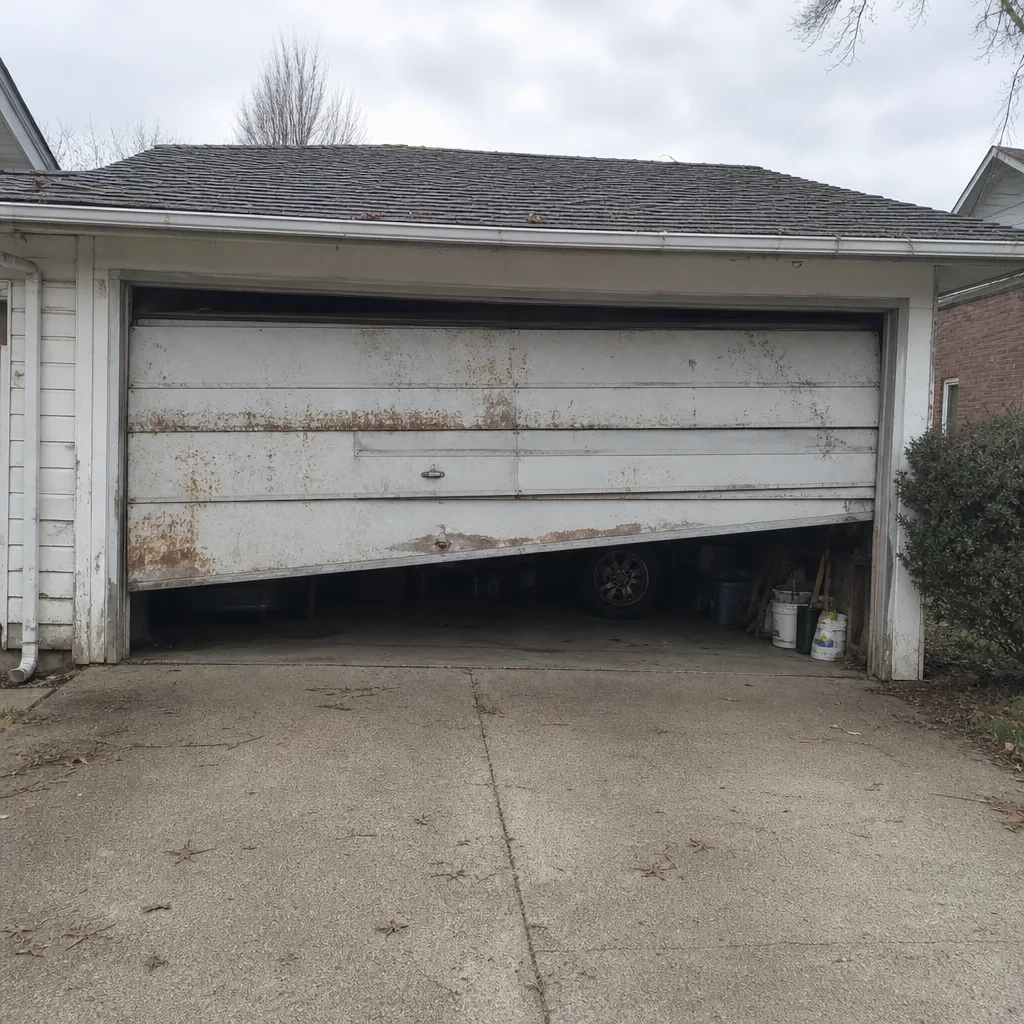 Before
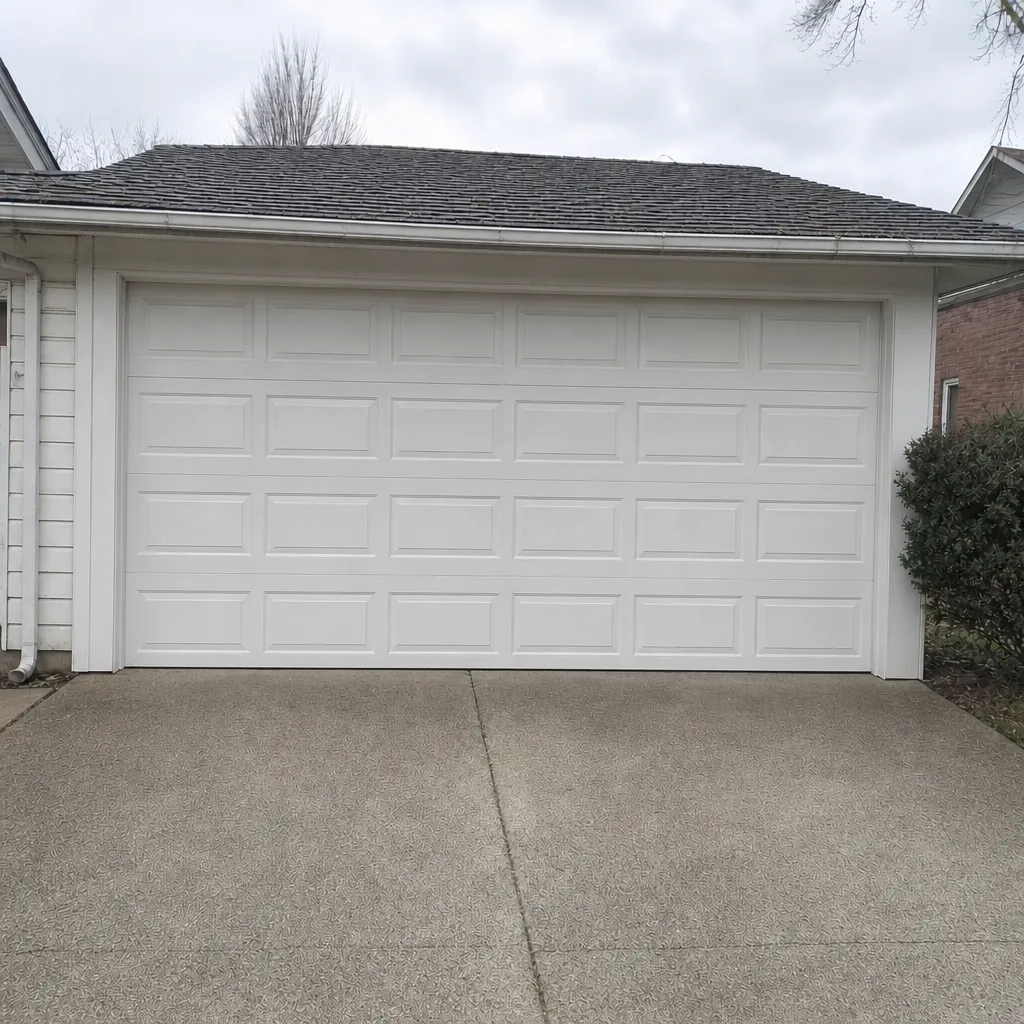 After
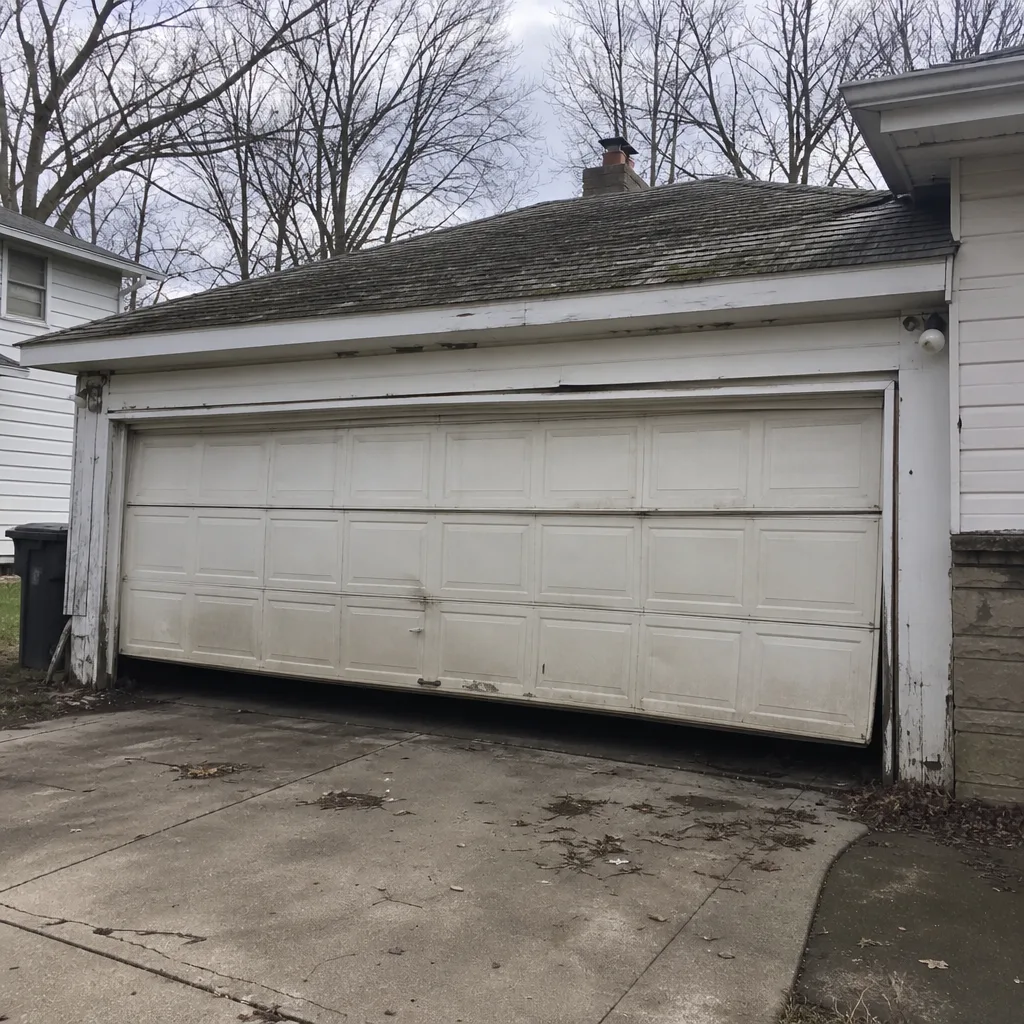 Before
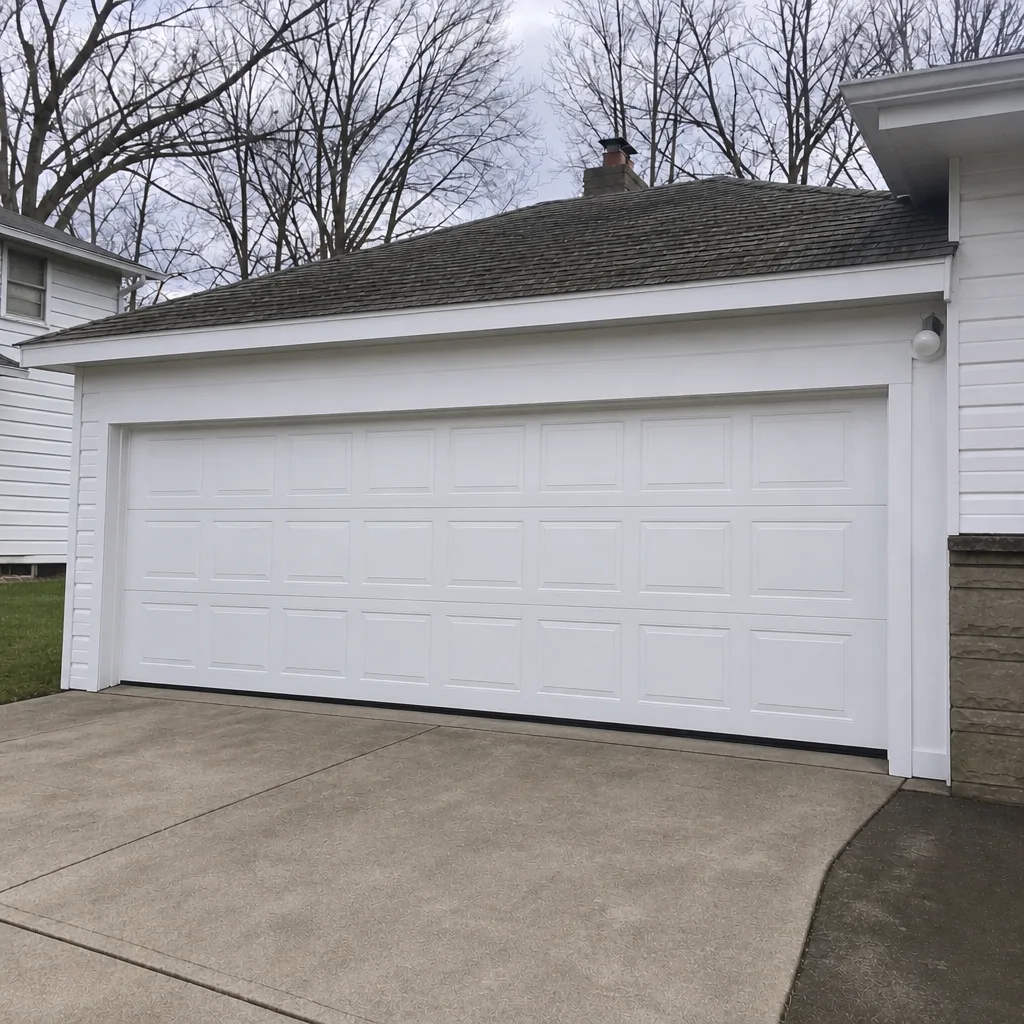 After
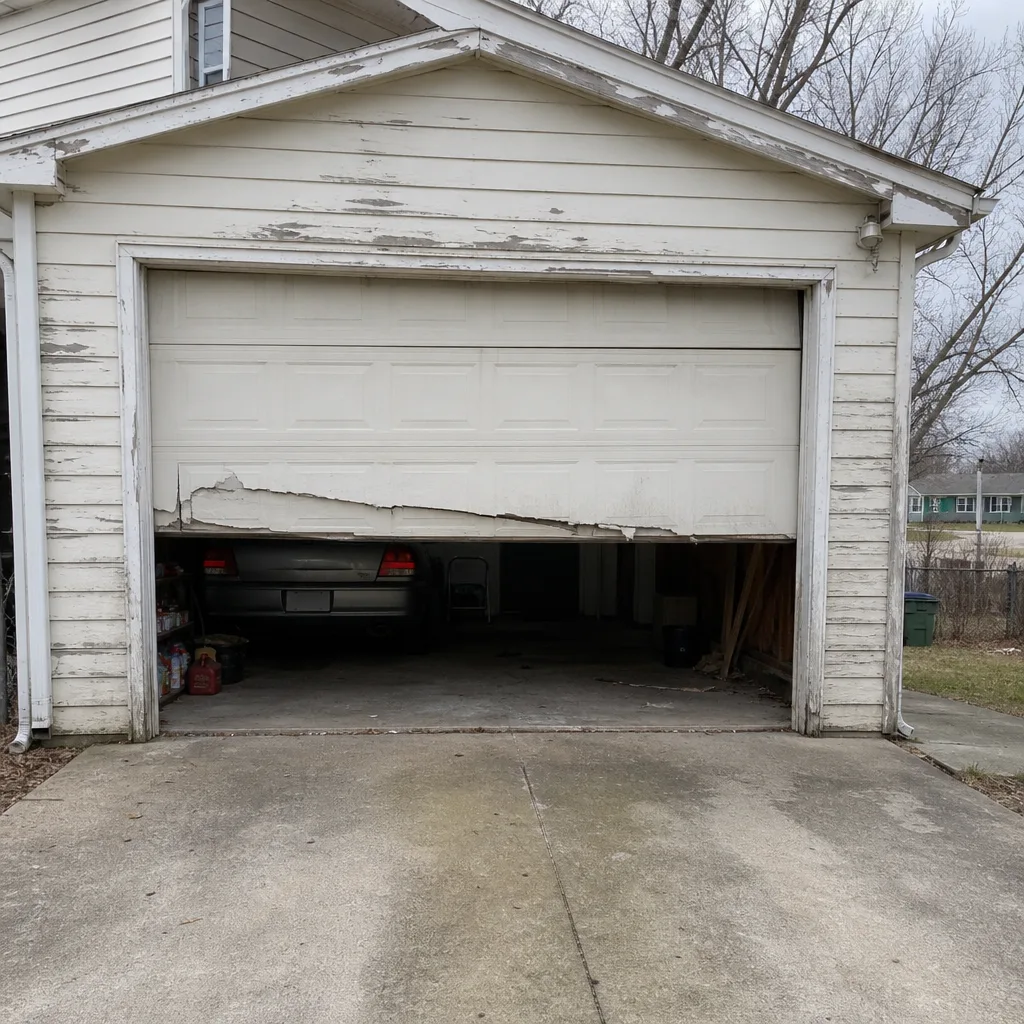 Before
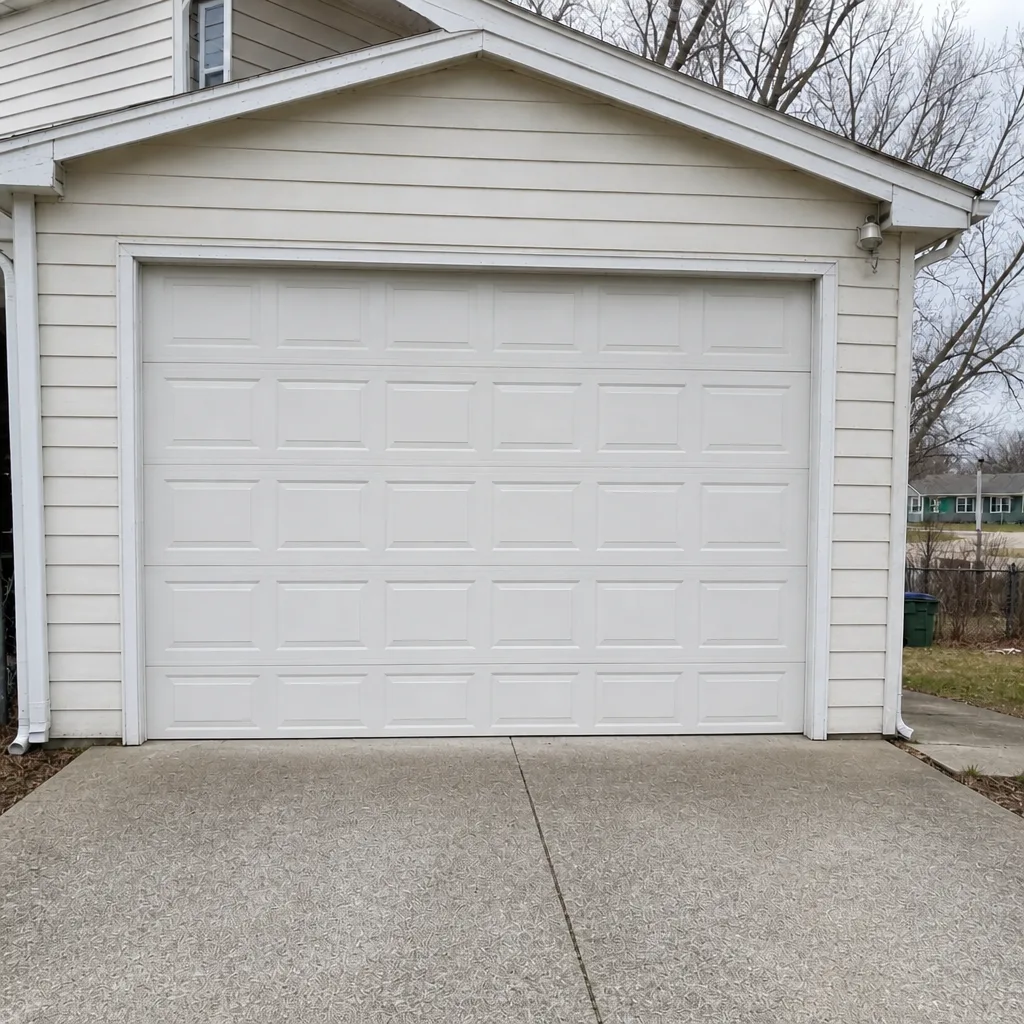 After
When to Call a Professional
Some brand comparisons are useful exercises. Others are ways of postponing a repair that’s already overdue. Call us when the door won’t open or close, when you hear a bang from the garage and the door won’t lift, when a cable is frayed or visibly off its drum, when the opener runs but the door doesn’t move, when a panel is dented or cracked, when the door has shifted in its opening, or when you’re ready to replace an aging door and want a proper measure before you buy. Springs and cables are the two most dangerous parts of the system, and no amount of brand research replaces a trained technician with the right tools. Hamilton Garage Door Repair Co offers free estimates in Hamilton – call (833) 482-6774. We answer 24/7. Fast dispatch from 7am to 7pm, Sunday through Friday.
When you call, we’ll help you work through the brand question against what’s actually on your door. The price is quoted and agreed before any work starts, and the written estimate sets the final price. Call (833) 482-6774. We answer 24/7. Fast dispatch from 7am to 7pm, Sunday through Friday.
Frequently Asked Questions
There isn’t one best brand. For most Hamilton homes, the right choice is a Clopay, Amarr or Raynor door at the mid or upper tier with polyurethane-injected or thermal-break construction, standard hardware, and a warranty that allows an independent servicer to do the work. Wayne Dalton and Genie systems are common in Hamilton homes too and serve fine when the parts are sourceable locally. The construction spec matters more than the logo. Call (833) 482-6774 for an exact quote – estimates are free.
A new garage door in Hamilton is typically quoted per job after a free measure, and the price depends on the size, insulation tier, hardware and opener integration. Entry-tier doors cost less than mid-tier polyurethane doors, and upper-tier thermal-break doors cost more. You’ll get a written estimate before any work starts, and that estimate sets the final price. Call (833) 482-6774 for an exact quote – estimates are free.
No. We’re brand-agnostic and we service LiftMaster, Chamberlain, Genie, Clopay, Amarr, Wayne Dalton, Craftsman and Raynor equipment. You don’t have to switch brands to get good service, and you don’t have to stay with a brand whose hardware is proprietary if a different brand fits your next door better. A technician can tell you in minutes what’s on your door today and what options fit. Call (833) 482-6774 for an exact quote – estimates are free.
No. The price is quoted and agreed before any work starts, and the written estimate sets the final price. If the job turns out to be different from the quote, we tell you before we do the work, not after. That’s the whole point of a free measure and a written estimate. Call (833) 482-6774 for an exact quote – estimates are free.
The local professionals we connect you with are licensed and insured as their state requires, and our technicians have up to 8 years of experience. We work on all eight of the major brands, so we work on whatever is on your door. Call (833) 482-6774 for an exact quote – estimates are free.
Yes, same-day service is available for repair work. We answer 24/7. Fast dispatch from 7am to 7pm, Sunday through Friday, and a call outside those hours is booked into the next opening. Springs and cables are the most dangerous parts of the door, so don’t try to fix them yourself. Call (833) 482-6774 for an exact quote – estimates are free.
The Bottom Line
For Hamilton homeowners, the brand name on a garage door matters less than the construction behind it: layer count, insulation method, steel gauge, wind load rating, and whether the hardware is standard enough that a local technician can source it fast. Clopay, Amarr, Raynor, Wayne Dalton, LiftMaster, Chamberlain, Genie and Craftsman all have models that fit Hamilton homes well; which one fits yours depends on the garage’s exposure and your budget, not the marketing slogan. Identify what you have, get the construction spec in writing, ask the warranty and parts questions, and get a proper measure before you commit. Springs and cables are dangerous and deserve a specialist. If you’re ready for the next step, we’re a phone call away. Call (833) 482-6774 for a free estimate. We answer 24/7. Fast dispatch from 7am to 7pm, Sunday through Friday.
For repair work on an existing door, see our garage door repair page. For opener issues, the garage door opener repair page spells out what’s involved. And for the full replacement path from measure to install, the garage door installation page walks through the process end to end. If you’d like to start with the company overview, visit Hamilton Garage Door Repair Co. Your door, your brand – we work on it.
Written by the team at Hamilton Garage Door Repair Co.