
Last updated November 23, 2026
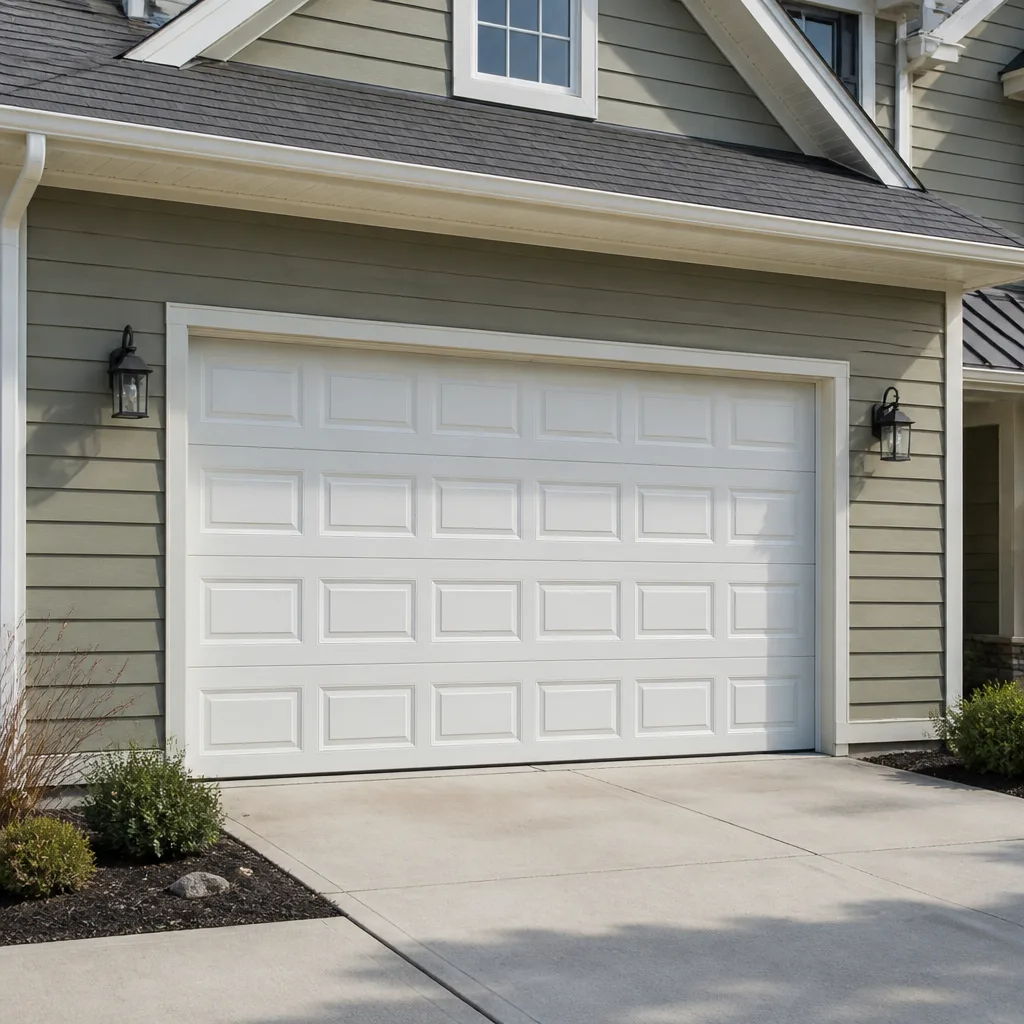 Raised-panel steel
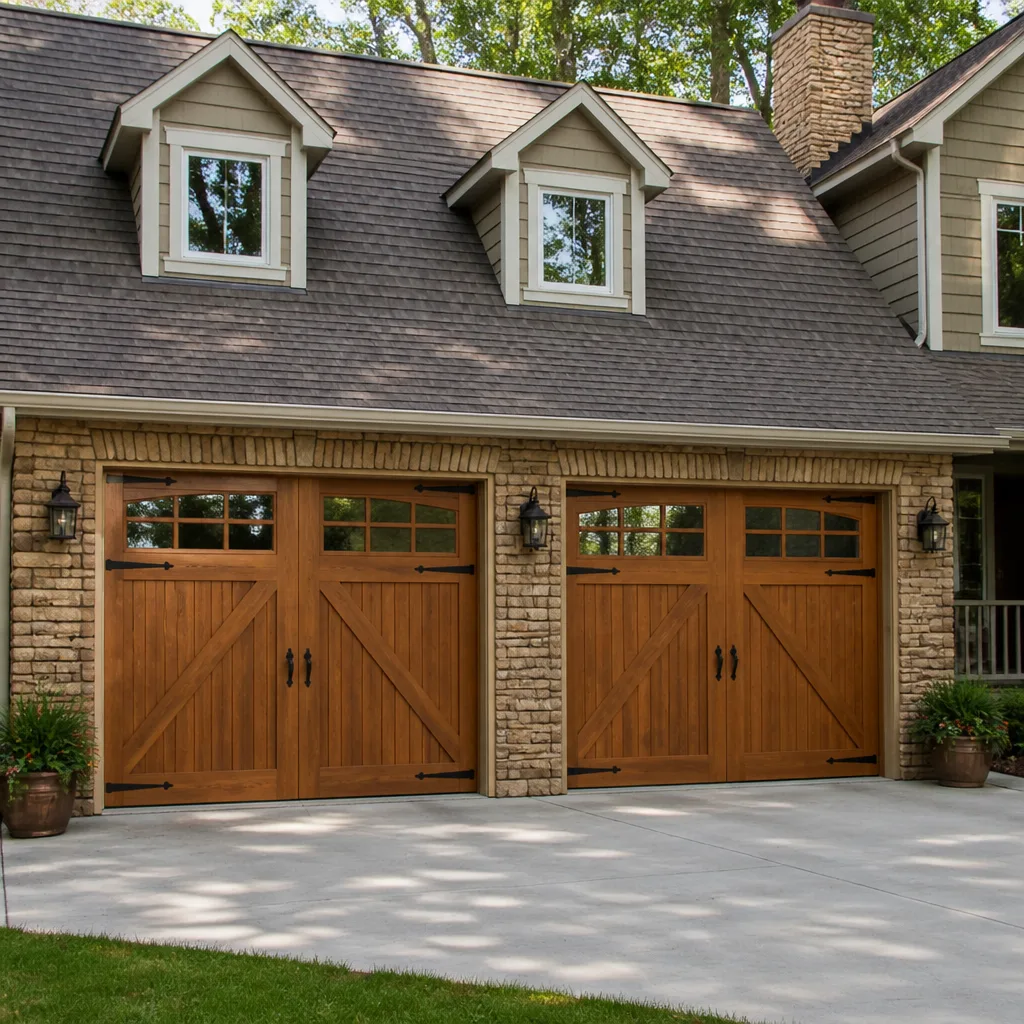 Carriage house
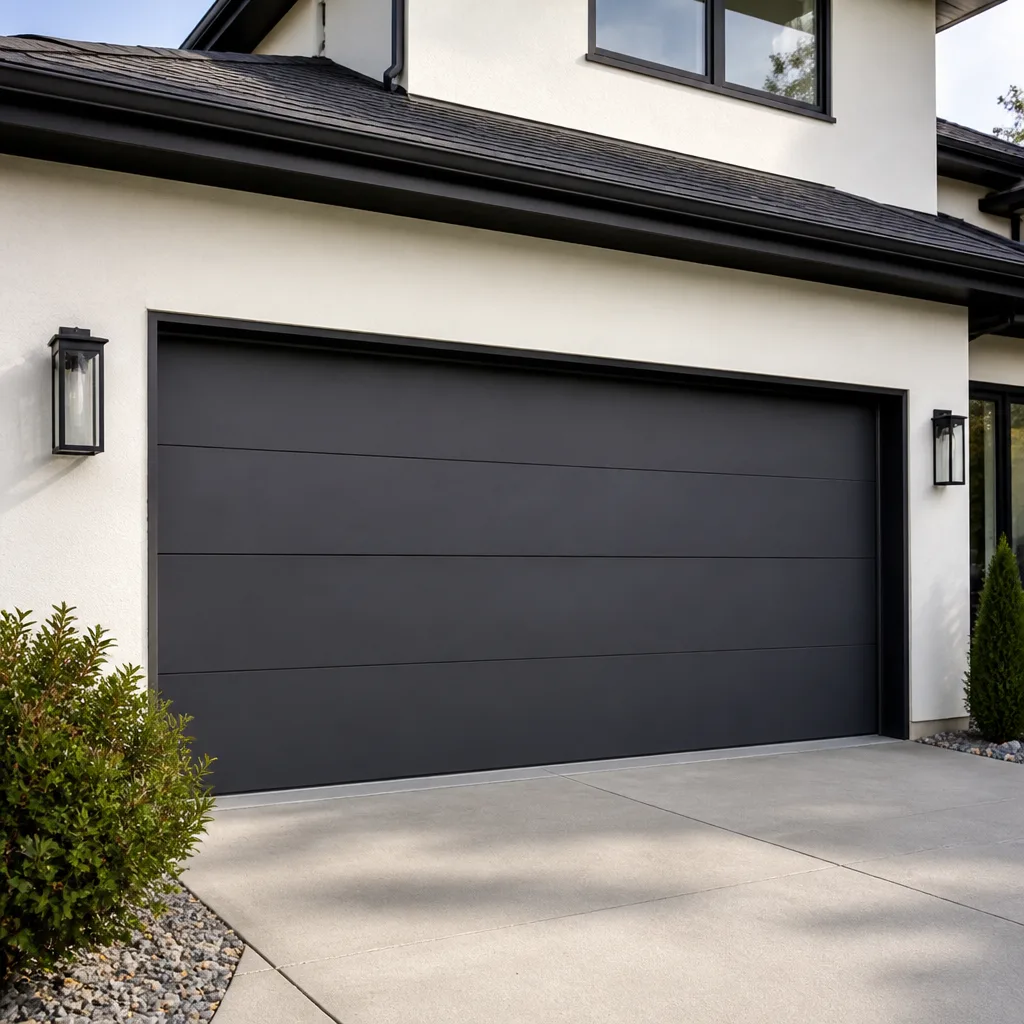 Modern flush
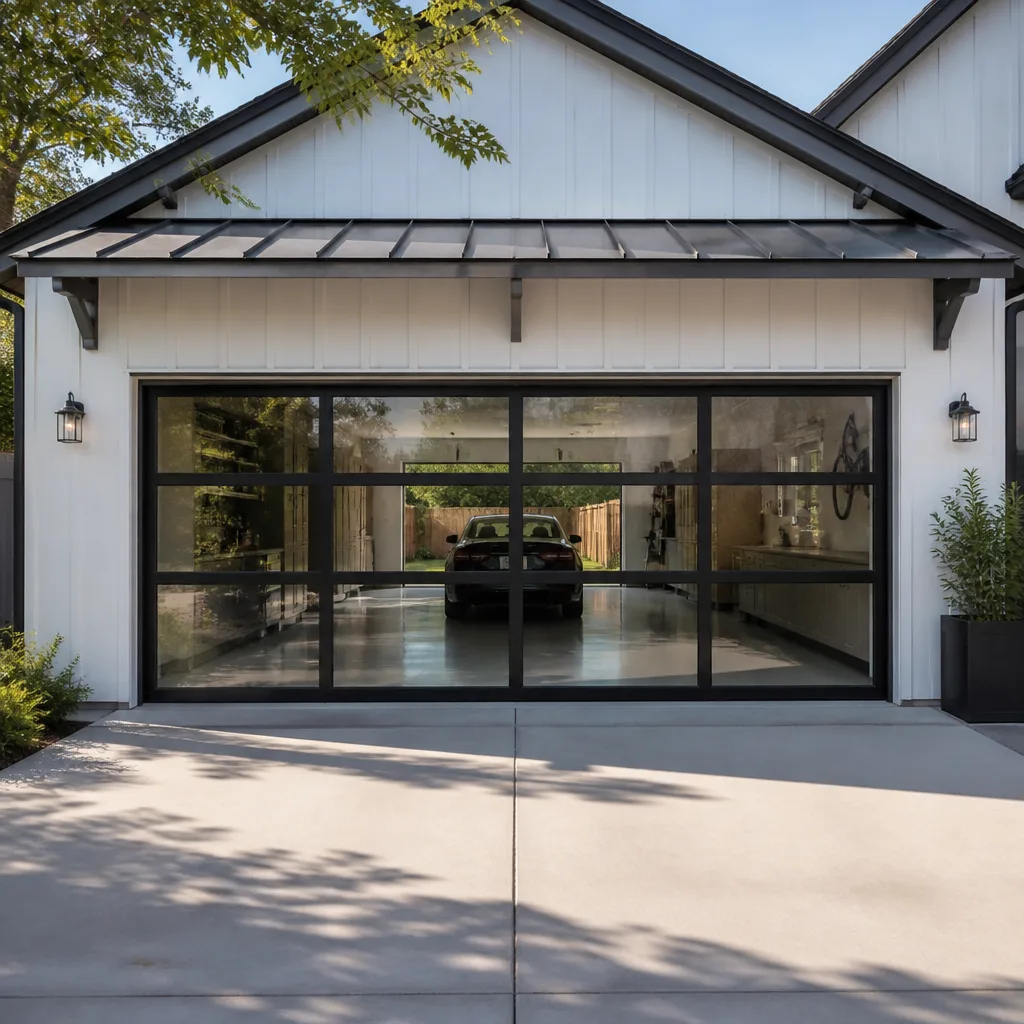 Full-view glass
 LiftMaster openers
 Chamberlain openers
Full 25-point door and opener safety check with every visit - springs, cables, rollers, tracks, and your LiftMaster or Chamberlain opener included
You get a price before we start. It does not change when the pro arrives.
Get your free estimateGarage Door Cost Breakdown: The Hamilton Homeowner’s Reference for 2026
The $800 door installation you see advertised assumes your garage opening is standard width, your header has adequate clearance, your existing springs can handle the new door weight, and your opener is compatible. In Hamilton’s older housing stock, at least one of those assumptions is wrong more often than it’s right. The reason a real estimate comes in higher isn’t that contractors are padding invoices. It’s that the ad quote is pricing a door in a vacuum, while the job that actually happens includes the header board that needs furring, the tracks that don’t reach, and the springs that weren’t built for a heavier panel. This guide breaks down what garage doors really cost in Hamilton in 2026, tier by tier, and shows you the line items that show up on legitimate invoices but rarely make it into advertised estimates.
Quick Answer
A standard single-car steel garage door replacement in Hamilton typically runs roughly $1,100 to $2,100 installed in 2026, while a double-car door ranges from about $1,800 to $3,500 depending on material, insulation, and the condition of your existing tracks, springs, and opener. Expect add-on line items of $100 to $600 when the job requires track extension, a new spring set sized for the door’s weight, or haul-away of the old door. The written estimate is always the final word on price, and it’s quoted before any work begins.
Styles & brands we work with
- Raised-panel steel
- Carriage house
- Modern flush
- Full-view glass
- LiftMaster openers
- Chamberlain openers
Table of Contents
- Parts and installed cost tier by tier: steel, composite, wood, and aluminum
- The hidden line items on a legitimate invoice
- How to read a garage door quote without getting upsold
- Opener compatibility: when an upgrade is necessary and when it isn’t
- The cost of doing nothing: how deferred maintenance compounds
- Which repairs are fixed-cost across brands and which aren’t
- Typical repair costs in Hamilton at a glance
- How Hamilton’s climate and housing affect the bill
Parts and Installed Cost Tier by Tier: Steel, Composite, Wood, and Aluminum
The dominant cost driver on a replacement is the door itself, and door prices span a wide range even within a single material. Here’s how the four main materials break down for Hamilton homeowners in 2026, factoring local labor rates on the install side. These are estimates for planning; the written quote from the local pro is what sets the final price.
Non-Insulated Steel
The entry tier. Single-car: roughly $550 to $900 for the door, $1,100 to $1,600 installed. Double-car: roughly $850 to $1,400 for the door, $1,600 to $2,400 installed. Steel is the workhorse material because it handles Hamilton’s temperature swings without cracking or warping. The tradeoff is that non-insulated steel transmits cold into an attached garage fast, and it dents more easily than thicker-gauge panels.
Insulated Steel
Single-car: roughly $850 to $1,400 for the door, $1,500 to $2,300 installed. Double-car: roughly $1,300 to $2,400 for the door, $2,200 to $3,600 installed. This is the tier most Hamilton replacements land in, because an attached garage on a house with bedrooms above it benefits from a barrier between outside air and living space. From a brand standpoint, Clopay and Amarr both carry strong insulated steel lines, and Wayne Dalton’s insulated options are common on newer builds around the city.
Composite and Faux-Wood
Single-car: roughly $1,400 to $2,400 for the door, $2,100 to $3,300 installed. Double-car: roughly $2,200 to $3,800 for the door, $3,000 to $5,000 installed. Composite delivers the wood look without the repainting or rot risk that plagues real wood. It’s a good middle path for a homeowner who wants curb appeal but doesn’t want to be refinishing panels every few years.
Wood and Aluminum
Wood: roughly $2,000 to $5,000+ for the door depending on species and construction, plus installation. Real wood needs regular refinishing and is sensitive to moisture. Aluminum: roughly $1,600 to $3,500 for full-view or glass-heavy designs. Aluminum-and-glass doors look excellent on modern builds but weigh more, which raises the spring and hardware demands. Both tiers are worth considering carefully in Hamilton’s climate, since wood needs more upkeep and heavy doors demand matched spring systems.
The Hidden Line Items on a Legitimate Invoice
Advertised estimates strip out the line items that only show up once a technician is standing in your garage. That’s not dishonesty on a real quote – it’s the difference between a price for a door and a price for an installed system that actually works. Here are the line items you should expect to see on a competent estimate, and why they appear.
Haul-Away and Disposal
Roughly $50 to $150. Old garage doors don’t fit in a standard trash can, and they’re heavy awkward panels that a municipal pickup won’t take without special handling. Every legitimate installer either charges for removal or states clearly that haul-away isn’t included and leaves the old door on the property.
Track Extension Kits for High-Lift Applications
Roughly $100 to $350, plus labor. Standard tracks leave about 7 inches of clearance above the door in the open position. If you have room above the header or want to change the door’s arc (for a taller vehicle, or to clear a storage rack), a high-lift track kit raises and reshapes the travel. This is a common line on Hamilton homes where the garage ceiling is higher than the original door assumed, or where a previous homeowner added a car lift or overhead storage.
New Spring Sets When Door Weight Changes
Roughly $120 per spring for extension, more for torsion depending on size and cycle rating. A new door with a different weight profile needs springs sized for that door, not the springs that came off the old one. When a homeowner upgrades from non-insulated steel to an insulated double-car door, the weight delta is significant enough that reusing old springs is unsafe. Reputable estimates include new springs; advertised ones often don’t.
Header and Jamb Remediation
Roughly $150 to $600. Older Hamilton homes frequently have header boards that sag slightly, rot at the base, or were framed to a non-standard width. When the new door has to mount to a squared, sound opening, remediation is part of the job. This is the line homeowners push back on hardest, and it’s almost always visible once you know to look for it.
How to Read a Garage Door Quote Without Getting Upsold
A clean quote makes the boundary between “included” and “extra” visible. Read the estimate as a set of decisions, not a single number. Here’s a sequence for reading any garage door estimate critically.
- Check that the door model is named, not just a material. “Insulated steel double door, R-value and brand” is a real line. “Steel door” is not – it leaves the spec open to a cheaper substitution later.
- Confirm springs are sized, not assumed. A quote that doesn’t mention springs is a quote that intends to reuse whatever’s on your existing system. Ask directly whether the discount assumes new springs or not.
- Look for the opener compatibility line. If the quote includes “opener replacement” without explaining what’s incompatible, ask why. If it doesn’t mention your existing opener at all, ask whether the new door weight is compatible with your current LiftMaster, Chamberlain, or Genie unit.
- Check haul-away and disposal. Either it’s on the quote, or it’s a separate charge later. Find out which.
- Look for the header or jamb line. If it’s not there, ask whether the quote assumes the existing opening is square and sound. If the answer is yes, ask what happens when it isn’t.
- Confirm the total is a fixed number, not a range. A professional estimate is a number. A range means the line items aren’t settled yet.
Red Flags on a Quote
- No specs on the door, just a material and a size.
- Springs and opener not mentioned at all.
- No mention of disposal.
- Price is a wide range with no line items under it.
- The quote includes a “free” opener upgrade without explaining what’s wrong with the existing one.
If you’re replacing the whole system, a written estimate covering door, springs, tracks, and opener together is far more useful than a door-only quote. If you only need one part of the system repaired, garage door repair is a separate, cheaper estimate – worth running before you commit to a full replacement.
Opener Compatibility: When an Upgrade Is Necessary and When It Isn’t
Door weight and opener torque are matched. A newer insulated door, especially a double-car, puts significantly more load on the opener than the old non-insulated single door did. This is the single line item most likely to appear on a quote, and the one most likely to be unnecessary – or, in the worst case, hidden until install day.
When You Genuinely Need a New Opener
- The existing opener’s torque rating is below the spec for the new door’s weight.
- The existing opener’s safety reverse feature is non-functional or was never installed (common on very old units).
- The opener is a pre-1993 unit without modern rolling code technology, which matters for security.
- The opener motor has already been oversized to compensate for a worn-out old door, and will be dangerous over-boosted on a fresh door.
When Your Existing Opener Is Fine
A LiftMaster or Chamberlain unit in good condition with adequate headroom and reverse testing that passes is usually fine for a comparable-weight replacement. An opener that has driven a heavy wood door for years at correct torque will handle a lighter steel replacement easily. If your existing Genie or Craftsman opener is a modern rolling-code unit and the door weight is comparable, there’s no compatibility reason to upgrade – only preference.
How to Challenge an Opener Upsell
Ask two questions. First: “What is the weight rating of the new door, and what is the weight rating of my current opener?” Second: “Does my existing opener’s reverse test pass?” If the seller can’t answer either with a number, the opener line isn’t justified on compatibility grounds. The written quote should state what’s being replaced and why. If the compatibility reason is real, it will name the door weight and the opener spec.
The Cost of Doing Nothing: How Deferred Maintenance Compounds
Garage door problems don’t stay at the same cost. A cheap repair left alone grows into an expensive one because most garage door components are coupled. A worn roller adds drag to the track. Added drag strains the opener. The strained opener works harder and wears faster. The cost of ignoring a small issue is rarely a single big bill; it’s a ladder of component failures that keeps climbing.
The Classic Progression
A worn roller – typically $20 to $45 to replace – starts making noise or adds drag. Left alone for a season, the extra drag causes the roller to ride the track at an angle and slowly wear the track itself. A track repair that could have been avoided runs $200 to $450 on top of the roller replacement. Meanwhile, the extra drag has been straining the opener, and the torsion spring is doing more work than it was designed for.
Why Springs Amplify the Problem
Torsion springs are sized for the door’s weight and balanced against it. When a roller adds drag or a bent track forces the door to push harder, the spring has to absorb that extra load. Springs are cycle-rated devices – every spring has a designed number of open-and-close cycles, and extra load uses those cycles faster. A small drag on the door shortens the spring’s life, and a torsion spring replacement is $180 to $340 per spring. Let two of them go and the ladder gets expensive quickly.
What “Doing Nothing” Actually Costs
Homeowners rarely save money by waiting. The safe move is to fix noisy rollers and dragging tracks before they cause a track failure or a spring snap. We answer 24/7 if something goes wrong on your door, but we’d much rather fix the roller than the aftermath. An honest inspection at low cost is cheap insurance against a scheduled replacement.
Which Repairs Are Fixed-Cost Across Brands and Which Aren’t
Because we’re factory-familiar with LiftMaster, Chamberlain, Genie, Clopay, Amarr, Wayne Dalton, Craftsman, and Raynor, we see how cost lands across the market. Some repairs price the same regardless of brand, and some don’t. Knowing which is which helps a homeowner budget and helps spot a quote that’s pricing a repair you don’t have.
Fixed-Cost Repairs
- Roller replacement. Rollers are largely universal. Typically $20 to $45 per roller; a full set of 10 to 12 replaces in an hour or so.
- Torsion spring replacement. Priced by spring size and cycle rating, not by brand. Typically $180 to $340 per spring. Matched pairs are usually replaced together, so a pair costs about twice that.
- Cable replacement. Universal hardware. Roughly $100 to $200 per cable plus labor.
- Hinge replacement. Standard hinges at standard sizes. Low per-unit cost.
- General track adjustment or re-alignment. Labor-based, brand-neutral. Typically $90 to $180.
Variable-Cost Repairs
- Opener repair. Parts vary widely by brand and model. A LiftMaster logic board, a Genie drive gear, a Chamberlain capacitor – each prices differently and availability shifts.
- Panel replacement on a specific door model. If a Clopay or Amarr panel is no longer produced, a match becomes a custom order. Costs vary significantly based on the panel’s age and design.
- Opener replacement. Modern opener pricing runs roughly $300 to $650 installed depending on brand, capacity, and whether it includes smart features.
- Weather seal replacement. Sized to opening width and door profile. Roughly $60 to $200 depending on width and style.
The takeaway: if a quote for a spring or roller or cable repair varies widely across brands, ask why. Those shouldn’t vary. If a quote for an opener repair is high and the reason isn’t explained with a part name and part cost, ask for the breakdown.
Typical Repair Costs in Hamilton at a Glance
Here’s the whole system in one table, using the same ranges we use in estimates. These are typical ranges, not final prices – the written quote sets the price, and every job gets a written quote before work starts. If you’re looking at a repair rather than a full replacement, garage door repair covers the individual components below.
| Repair | Typical Hamilton Range | Notes |
|---|---|---|
| Torsion spring (one) | $180 – $340 | Matched pairs usually replaced together, cost roughly doubles |
| Extension spring (one) | $120 – $250 | Pair pricing applies |
| Roller set | $20 – $45 per roller | Full set of 10-12 typical |
| Cable replacement | $100 – $200 per cable | Both cables usually at same time |
| Track repair or adjustment | $200 – $450 | Depends on whether straightening or replacement needed |
| Opener repair | $120 – $350 | Variable by brand and part |
| Opener replacement | $300 – $650 installed | Brand and capacity dependent |
| Panel replacement | $150 – $600 per panel | Higher if panel is discontinued |
| Weather seal replacement | $60 – $200 | By opening width |
| Full door replacement (single) | $1,100 – $2,100 installed | Material dependent |
| Full door replacement (double) | $1,800 – $3,500 installed | Material and insulation dependent |
For opener-specific work, garage door opener repair is the right starting point, and for a full replacement, garage door installation runs a measure-and-quote visit.
How Hamilton’s Climate and Housing Affect the Bill
Hamilton sees four full seasons and enough winter ice to test a door’s moving parts repeatedly. That climate reality sits behind some of the costs above. Springs get stressed by freeze-and-thaw cycles, weather seals degrade faster, and tracks can shift slightly as concrete and headers move with the seasons. Doors that feel “fine” in May often need attention by November.
What Local Housing Does to Cost
Hamilton’s older housing stock around neighborhoods like Lindenwald, Prospect Hill, and the Ross Avenue corridor often has garage openings that were built to standards that don’t exist anymore. Non-standard widths, low headroom, and header boards that have settled are common. When a homeowner replaces a door in a 1940s or 1950s house, header remediation, track extension, and a new spring set are more likely to show up on the quote than they would on a 2000s build. That’s the biggest reason a Hamilton estimate sometimes runs higher than the advertised number – the underlying structure is older and needs support to take a new door properly.
Climate-Ready Add-Ons Worth Considering
- Better weather seals. The bottom seal and side seals are the first thing to fail in cold weather. Upgrading seal quality costs more upfront but holds up longer in a climate with real winters.
- Insulated door. Beyond comfort in the garage, insulation minimizes the condensation that comes with cold outside and warmer inside air.
- Colder-rated lubricant. Standard grease thickens in cold weather; cold-rated lubricant keeps rollers moving freely in January.
Common Mistakes to Avoid
- Comparing door-only prices. An $850 installed quote and a $1,400 installed quote aren’t the same product. One prices the door; the other prices the door, new springs, tracks sized for the opening, and disposal. Compare line items, not headline numbers.
- Assuming your existing springs will handle the new door. A heavier door with old springs is a safety problem, not an efficiency problem. Any honest estimate includes new springs when the weight changes.
- Buying the “free opener upgrade.” If the opener upgrade is included without a compatibility reason stated in writing, it’s often just shifting the cost of a lower-spec door into a higher-spec bundle. Ask what makes the existing opener incompatible.
- Ignoring noise and drag. A noisy door in Hamilton’s winter is often a roller or track problem that hasn’t broken yet. Fixing it in season is far cheaper than fixing it after it fails.
- Canceling the permit conversation. Most cities require a permit for garage door replacement (specifics vary), so ask your city’s building department what’s required before the install, not after it.
- Paying for a service call fee before you’ve seen a written estimate. A legitimate garage door estimate is free and the price is set per job, not by a fee credited back to the repair.
- Choosing the lowest quote without checking the disposal line. If the old door is going to be left in your driveway, that’s a cost you’re taking on later that isn’t on the invoice now.
See the difference
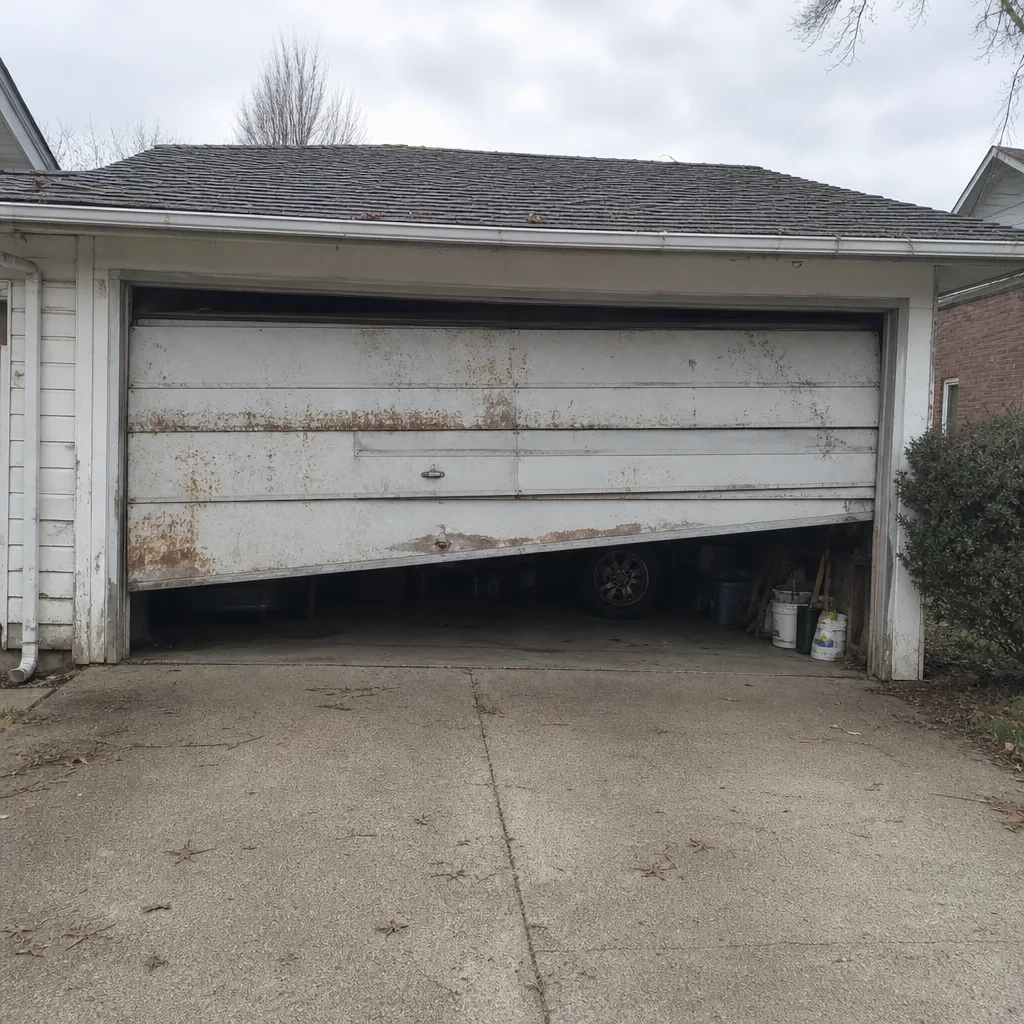 Before
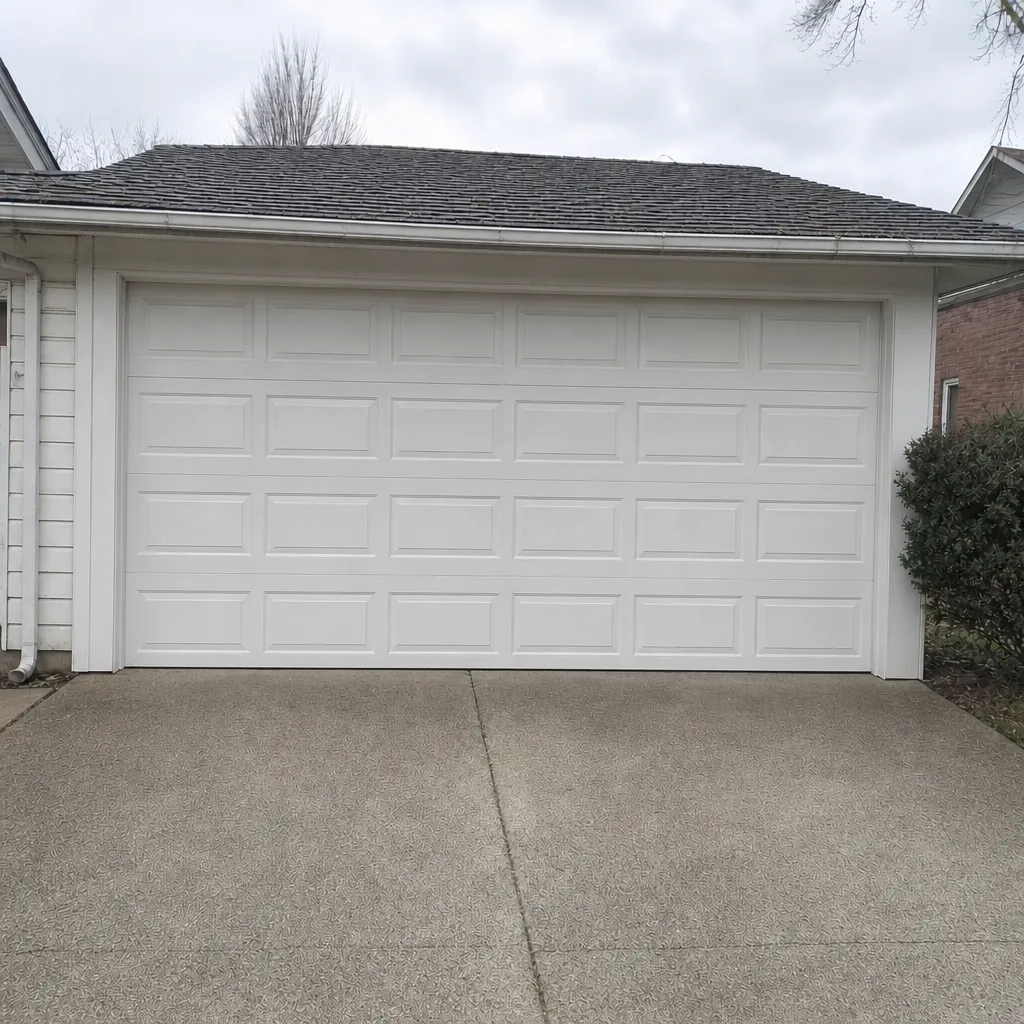 After
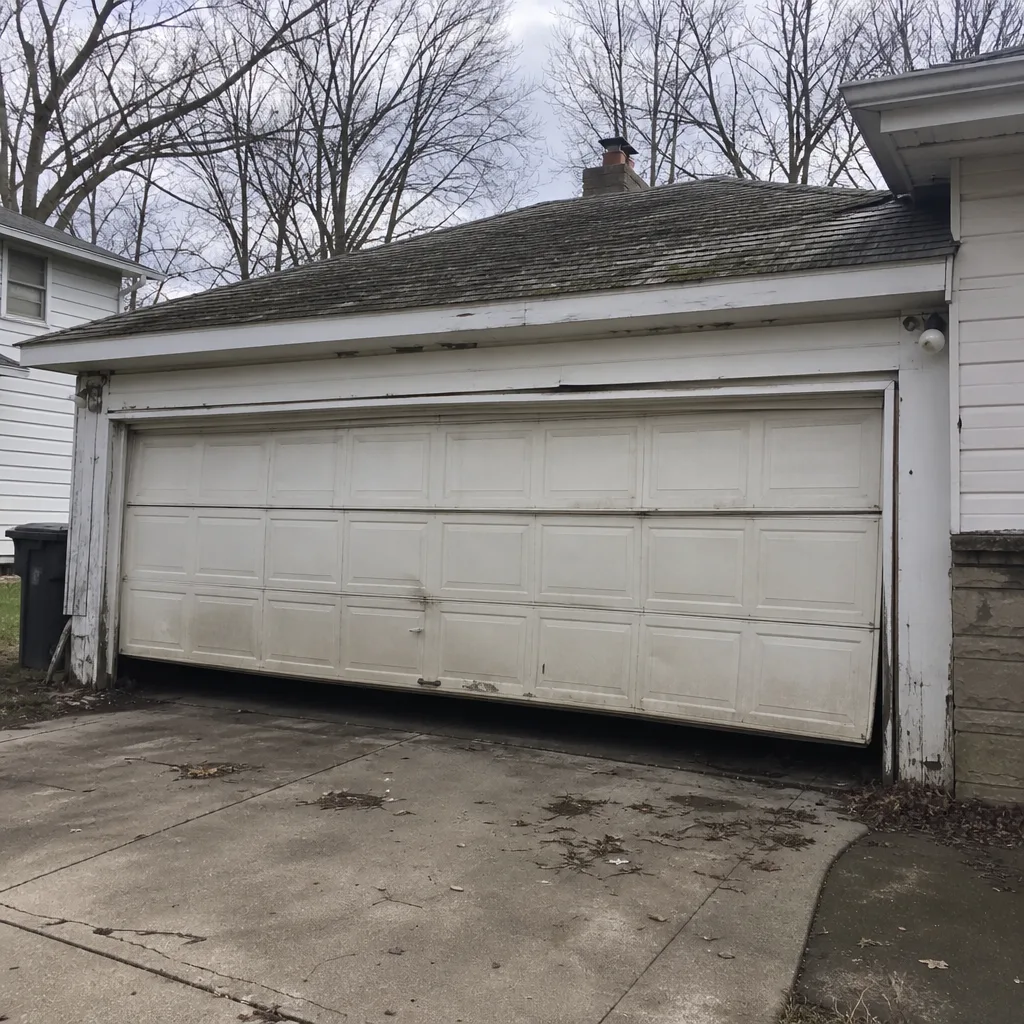 Before
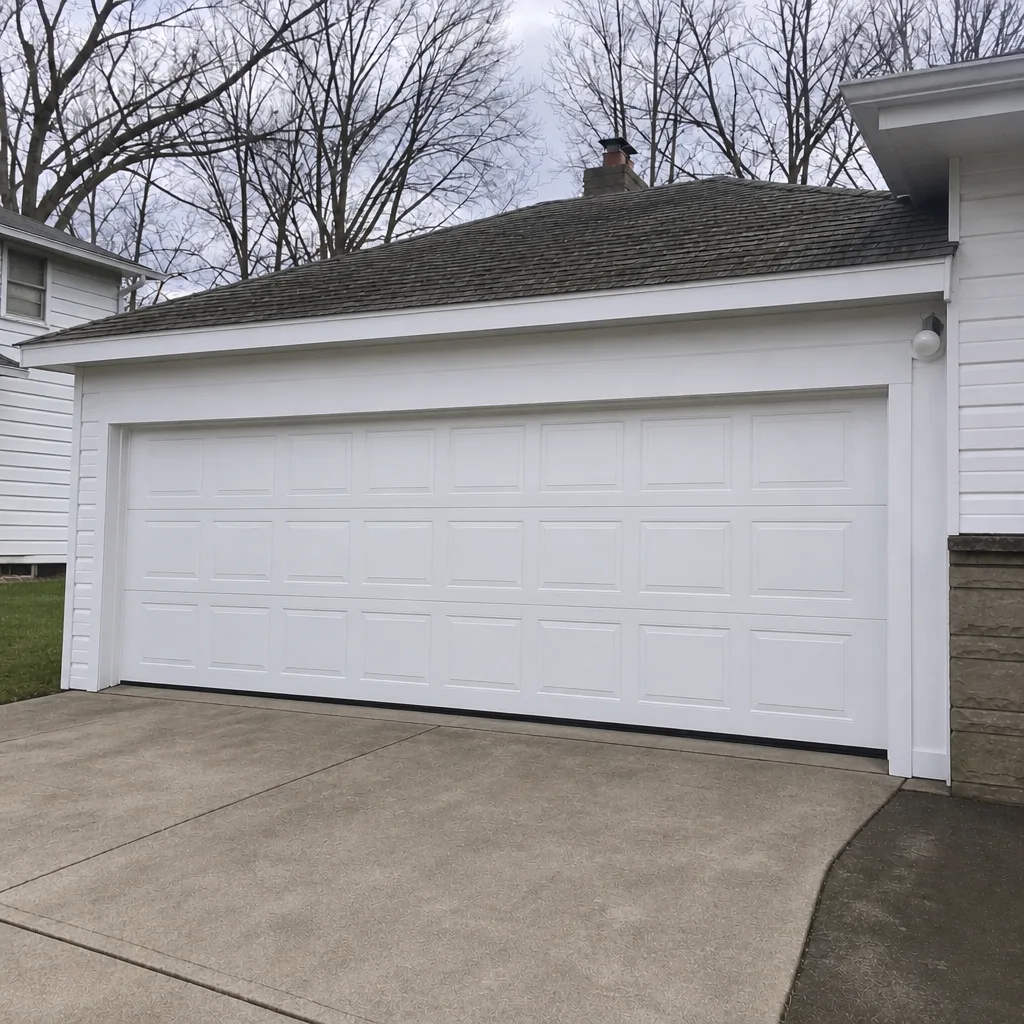 After
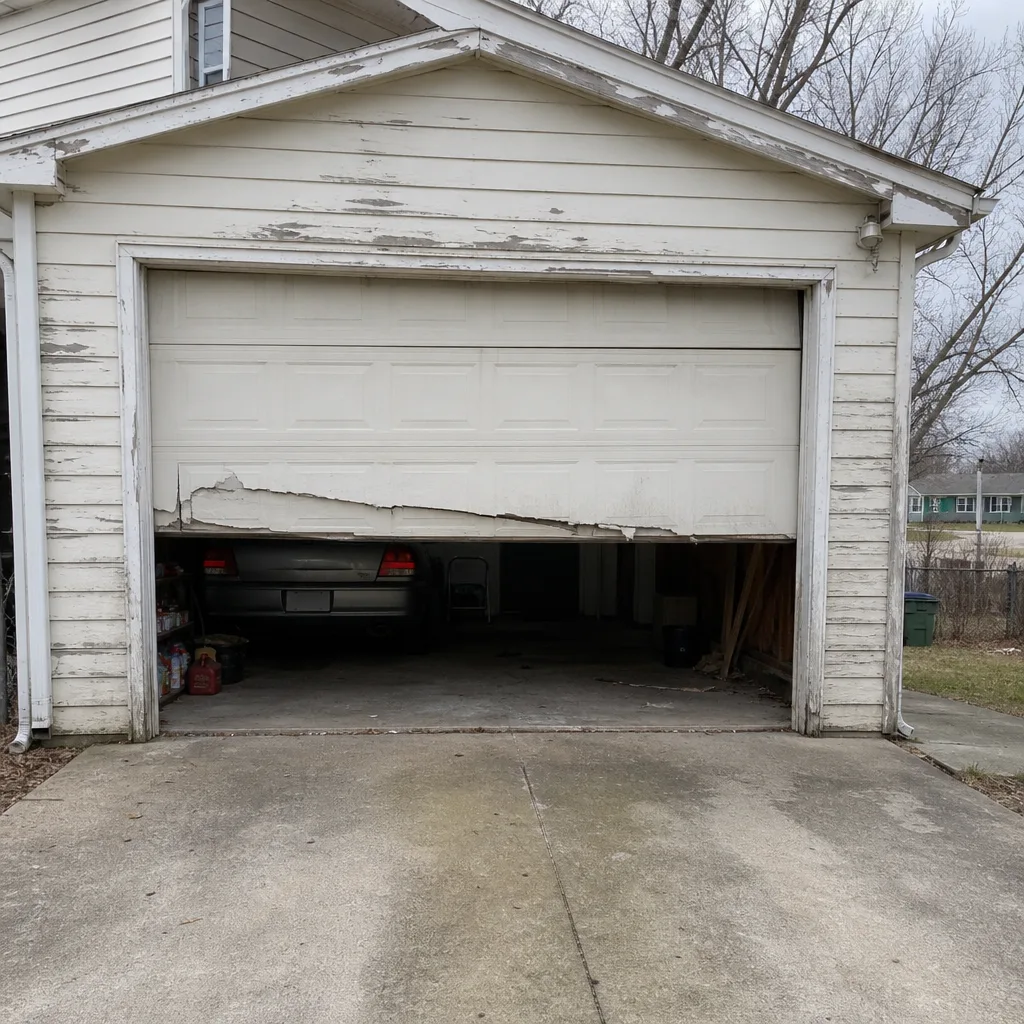 Before
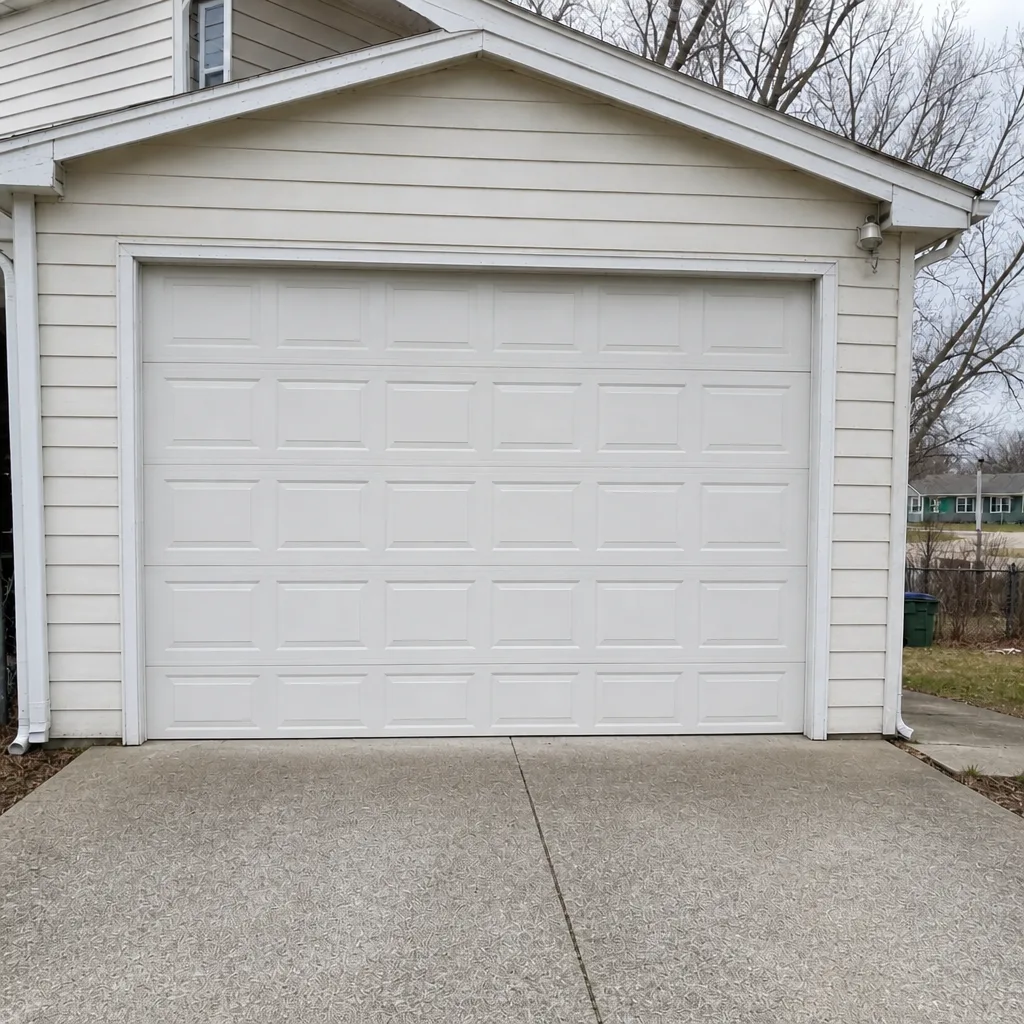 After
When to Call a Professional
Some garage door issues are cosmetic; some are genuinely dangerous. Springs, cables, and anything that requires opening the torsion system are the ones you should never touch yourself – a wound torsion spring stores enormous energy and can cause serious injury in an instant. Call a professional if the door comes off its track, if a spring has visibly snapped, if the door won’t stay up on its own, if the opener’s safety reverse no longer works, or if you hear a loud bang from the garage and find the door stuck partway. For anything that compromises the security of the home, emergency response matters more than the diagnosis. Hamilton Garage Door Repair Co offers free estimates in Hamilton – call (833) 482-6774. We answer 24/7. Fast dispatch from 7am to 7pm, Sunday through Friday.
Less urgent but worth a call: a door that’s slower than it used to be, rollers that squeal, weather seals that leak air, or a door that no longer seals evenly on the floor. Those are signs worth reading before they become someone else’s problem. Replacing a door is also a call worth making early – the measure-and-quote visit is free and the price doesn’t change if you wait to schedule. For a full system look, start with garage door repair before committing to a replacement.
Frequently Asked Questions
Garage door replacement in Hamilton typically runs about $1,100 to $2,100 installed for a single-car door and $1,800 to $3,500 installed for a double-car door, depending on material, insulation, and whether additional work is needed on tracks, springs, or opener compatibility. Add $100 to $600 for line items like haul-away, track extension, or a new spring set. The written quote sets the final price. Call (833) 482-6774 for an exact quote – estimates are free.
Advertised quotes price a door; a real estimate prices an installed system. The gap is usually one or more of four things: new springs sized for the new door weight, track extension for a non-standard opening, header or jamb remediation on older Hamilton housing stock, and haul-away of the old door. If any of those apply to your home, the $800 number wasn’t going to hold from the start. A written quote before work starts is what tells you the actual price.
Not always. A modern LiftMaster or Chamberlain opener that passes the safety reverse test and has adequate torque for the new door’s weight usually works fine on a comparable-weight replacement. You need a new opener when the existing unit’s rating falls below the new door’s weight spec, when the safety reverse doesn’t function, or when the unit predates modern rolling code. Ask for the door weight and opener spec in writing before accepting any opener line on a quote.
No. Torsion springs and cables are under high tension and can cause serious injury if handled incorrectly – this is the most dangerous repair in the garage door trade, and it should always go to a trained technician with the right tools and knowledge. A properly sized torsion spring replacement typically runs $180 to $340 per spring, and a matched pair is usually done together. Call (833) 482-6774 to schedule spring service – estimates are free.
No. A legitimate garage door estimate is quoted and agreed to in writing before any work starts. Changes only happen if you approve them – for example, if a technician finds a condition the initial estimate didn’t account for and you agree to the additional work. Ask for a fixed total, not a range, and confirm what’s included and what’s extra. Call (833) 482-6774 for a free written estimate.
Almost certainly yes. The technicians work on LiftMaster, Chamberlain, Genie, Clopay, Amarr, Wayne Dalton, Craftsman, and Raynor equipment – the eight brands that cover most of the doors and openers on Hamilton homes. There’s no need to switch brands just to get service. If your equipment isn’t one of those, call and describe what you have – we’ll tell you honestly whether it’s a fit. Call (833) 482-6774 for a free estimate.
The Bottom Line
Garage door costs in Hamilton start with the door, but they’re decided by everything around it: the header, the tracks, the springs sized for the door’s weight, the opener matched to the door’s torque, and whether disposal is included. A quote that names all of those is worth more than one that quotes a single number. Read every estimate as a set of decisions, not a price tag, and demand a fixed written total before work starts. The safest path for any door repair – especially springs and cables – is a trained specialist. For a free estimate on any Hamilton garage door job, including Hamilton Garage Door Repair Co service, call (833) 482-6774. We answer 24/7. Fast dispatch from 7am to 7pm, Sunday through Friday.
Written by the team at Hamilton Garage Door Repair Co.